
Apparel Sourcing Guide: Manufacturing Clothing in China
what to send, what a quote should contain, how long each stage takes, and how to check a factory before you pay a deposit





A working guide to sourcing womenswear from Ningbo · what to send, what a quote should contain, how long each stage takes, and how to check a factory before you pay a deposit
Start here: what kind of supplier you actually need
Most sourcing problems start with a mismatch rather than a bad factory. Before you shortlist anyone, decide which of these you are buying: Here is what a manufacturer in China actually does, in the order it happens.
- OEM: you own the design and supply a full tech pack. The factory builds exactly that. Highest control, longest development.
- ODM: you start from a style the factory has developed and change fabric, colour, print or trims. Faster, and you own less of the design.
- Private label: an existing body carries your labels and packaging. Fastest route to market and usually the lowest minimum.
- CMT: you supply fabric and trims, the factory cuts, makes and trims. Only worth it once you have your own material supply.
Most brands climb that list rather than pick one forever: private label to test demand, ODM to differentiate, OEM once volume and design ownership matter.
What to send so a factory can quote properly
A quote given without a tech pack is a range, not a number. Send as much of this as you have: From there, send your tech pack for a quote.
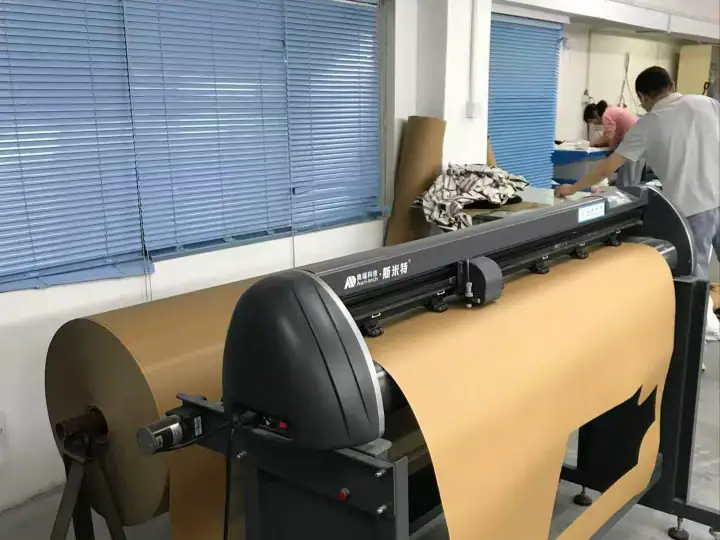
- A tech pack: flat sketches front and back, measurements or a graded spec sheet, construction notes, stitch type.
- Fabric: composition, GSM or weight, and whether you have a nominated supplier or a swatch.
- Trims and hardware: buttons, zips, labels, hangtags, and whether any are branded.
- Quantity: per style, per colour, and size breakdown.
- Target price and target delivery date, so we can tell you early if they do not meet.
- Compliance: destination market and any testing you need, REACH, azo-free, CPSIA.
If you do not have a tech pack yet, a clear brief with reference images gets you a working range in 24 hours, and we can build the pack with you from there.
Reading a quote: the lines that matter
A single unit price hides the decisions that make an order expensive. Ask for it broken out.
| Cost line | What sets the number | What to ask |
|---|---|---|
| Fabric | Yarn count or GSM, finish, mill lot size, whether it is in stock | Is this fabric in stock, and what is the mill minimum? |
| Trims and hardware | Buttons, zips, labels, hangtags, each with its own supplier minimum | Which trims have a supplier minimum above my order? |
| Cut, make, trim | Number of operations, stitch count, line set-up | How many operations is this style, and does a small run carry a set-up fee? |
| Development and sampling | Proto, SMS, PP, size set, number of rounds | Is the sampling fee credited back against bulk? |
| Washing and finishing | Enzyme, stone, softener, pressing, special packing | Is the wash quoted per piece or per batch? |
| Testing and compliance | Market, lab used, number of tests | Which test reports come with the shipment? |
| Freight and duty | Mode, season, destination, tariff classification | Is this FOB, and who books the freight? |
Sampling: the four stages and what each one is for
| Stage | What it is | What it locks |
|---|---|---|
| Proto | First sample from your pack, often in a substitute fabric | Fit, proportion, construction |
| SMS | Salesman sample in the actual bulk fabric | Hand feel, drape, print scale |
| PP | Pre-production sample made on the bulk line | The reference your bulk is judged against |
| Size set | One of each size, or a graded run | Grading, and whether the fit holds across the range |
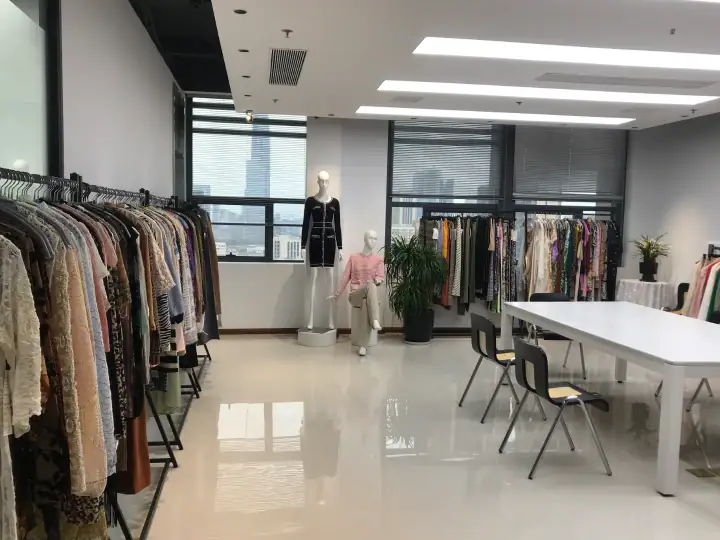
Bulk should not start until you have signed the PP. That single rule prevents more disputes than any other, because without a signed reference you have nothing to reject against.
Where MOQ actually comes from
A minimum is rarely set by the sewing line. It is set by the material: a dye lot, a yarn cone order, a mill minimum, or a trim supplier who will not sell you 50 buttons. Our published MOQ is 50 pcs per style, sizes mixed inside that quantity, and holding it at 50 depends mostly on choosing a fabric that already exists. We walk through where MOQ actually comes from on a separate page.
Be wary of any factory quoting 50 pcs on a custom fabric. The number usually moves once the tech pack is in.
Planning backwards from your delivery date
Work backwards. Take the date the goods must land, subtract freight, then subtract production, then subtract sampling, then subtract fabric development, and you will see where the real risk sits. It is almost always material, not sewing. See planning backwards from your delivery date for the full picture.
| Stage | Our standard | Note |
|---|---|---|
| Fabric or yarn development | Quoted per order | Only if the material does not exist yet |
| Sampling | 7–10 days | When fabric or yarn is available |
| Bulk, knit | 45–70 days | After PP approval and fabric confirmation |
| Bulk, woven | 45–90 days | Tailoring sits at the longer end |
| Bulk, sweaters | 30–55 days | Flat machine programmes |
| Sea freight to EU or US | Confirmed at quote stage | It moves with the season, so ask for the current transit window |
Pin the material down before you promise a date. That single habit saves more launches than any expediting you can do later.
Quality: what AQL does and does not mean
AQL is a sampling standard for releasing a batch, not a guarantee that every piece is perfect. We combine it with a 100% final inspection, which is the only way to catch what sampling misses. Our release standard is AQL 2.5, and in-line inspectors sit on the line rather than only at the end of it. Here is what AQL does and does not mean, in the order it happens.
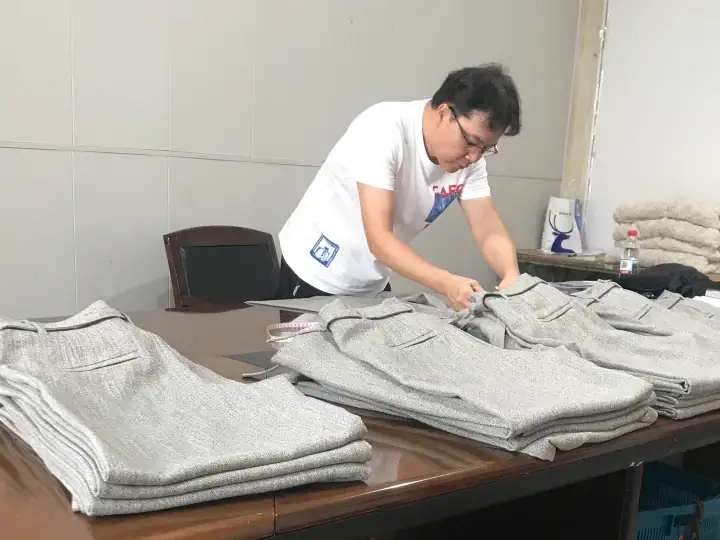
Ask any factory three things: what the written acceptance criteria are, who inspects in line, and whether the final inspection is 100% or sampled. If those answers are vague, the QC is too.
Seven checks before you pay a deposit
- The business licence scope matches what they claim to make. A licence that covers trading but not manufacturing tells you who will actually sew your order.
- The sewing floor is theirs. Ask for a live video walk during working hours, not a showroom tour and not a stock video.
- Bulk is gated behind a signed PP sample. If a factory will start on a photo or a similar sample, you have no reference to reject against.
- The AQL standard is written down, with in-line checks and a final inspection stated rather than implied.
- Fabric composition and origin are documented, with a composition statement and test reports where your market requires them.
- The quote is itemised, with unit price, sampling, testing and freight as separate lines.
- A reorder file exists: pattern, markers, approved fabric and the QC standard, kept on file so the second batch matches the first.
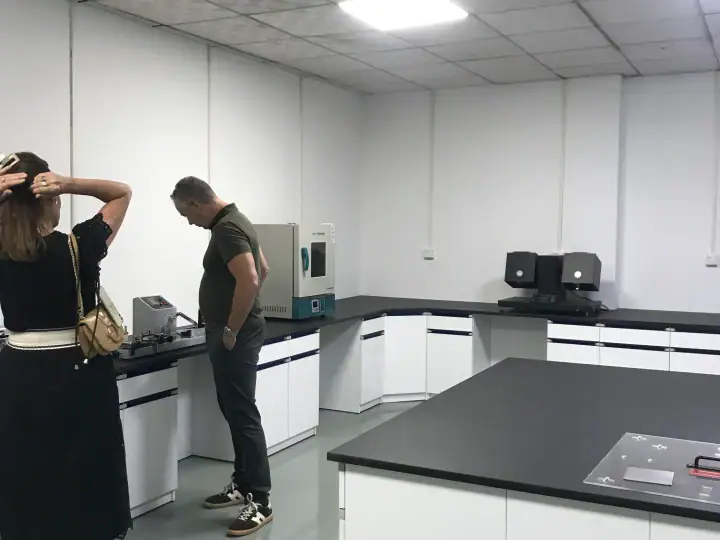
A licence or a factory address that turns out to be an office with production moved to an unnamed workshop. A sample room that is not the bulk line, so the samples are beautiful and the bulk is looser. An unusually low MOQ used to win the enquiry, followed by a price revision once the tech pack is in. A single-line quote that gets vague the moment you ask what is inside it.
Certifications and compliance by market
We hold BSCI, OEKO-TEX and REACH documentation, and work with GRS-certified recycled materials and BCI cotton where the brief asks for it. For export we confirm restricted-substance requirements by destination market, and we document fabric composition and origin per shipment. See certifications by market for the full picture.
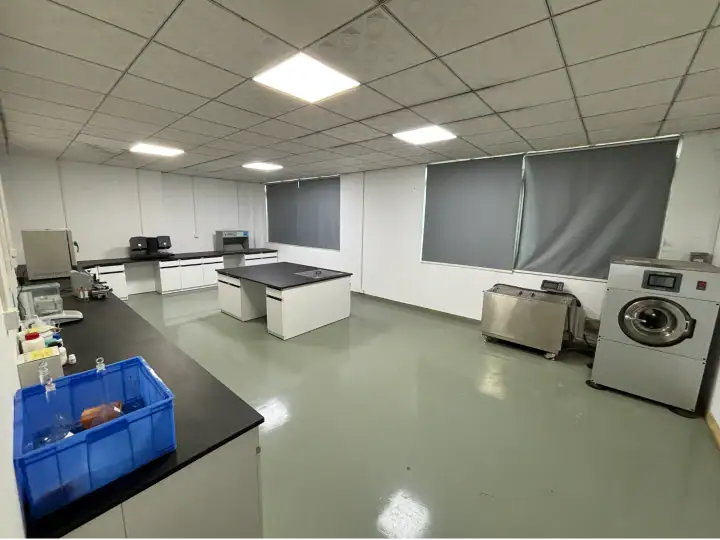
Whatever a supplier claims, ask for three things: the certificate number, the validity window, and the scope. Then check that the scope covers your product and the site that actually makes it.
Logistics and Incoterms, briefly
Most of our export business is FOB Ningbo, which means we handle the goods to the port and you or your forwarder handle freight, insurance and duty. Confirm which Incoterm you are quoting at the start, because it changes who carries the risk and who is paying for what. Payment is normally 20% deposit and 80% before shipment, by T/T or L/C at sight.
Where Ningbo fits, and where it does not
The advantage of sourcing here in 2026 is not the cheapest unit price. It is density: yarn, fabric, dyeing, printing, washing, hardware and trims sit within a short radius, so a comment on Monday's sample can come back corrected in the same week. That is what makes complex work realistic at 50 pcs.
Two honest caveats. Lead times are longer than they used to be, and US-bound goods carry real tariff exposure. On basic high-volume knit programmes the unit-cost gap has narrowed too, so if your line is 20,000 pcs of one basic body, you are in a different sourcing conversation from the one on this page.
Frequently asked questions
Q : How do I start if I have no tech pack?A : Send reference images, a rough size range, target quantity and target price. You get a working range in 24 hours, and we build the pack with you from there.
Q : What is a realistic first order?
A : 50 pcs per style is the common floor for export factories and it is ours. The real minimum is usually set by the fabric or yarn mill rather than the sewing line.
Q : How long does production take from tech pack to shipment?
A : Sampling takes 7–10 days when fabric is available. Bulk runs 45–70 days for knit, 45–90 days for woven and 30–55 days for flat machine sweaters, starting after PP approval and material confirmation. Freight sits on top.
Q : Should I visit the factory?
A : Yes if you can, and a live video walk during working hours if you cannot. Ask to see the line that would run your order. A factory that only offers showroom footage is telling you something.
Q : Do you subcontract production?
A : Core knit, woven and sweater production runs on our own lines across two Ningbo plants. Where specialist trims or third-party testing are involved, we tell you which partner and why, before it happens.
Q : Which certifications do you hold?
A : BSCI, OEKO-TEX and REACH, with GRS and BCI available where the brief requires. Ask for the certificate number, validity window and scope, and we will send the current documents.