
Custom Clothing Design Service — From Sketch to Approved Sample
Most designs change once you understand what the machine can do. Here is that conversation, written down.
New to Custom Knitwear? Decide in This Order
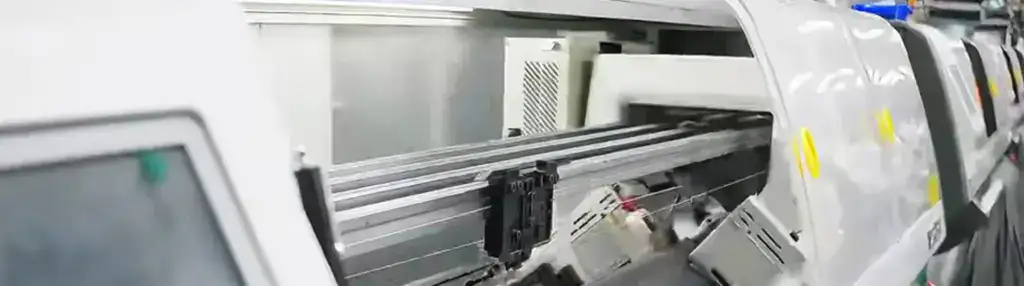
Yarn count and fabric weight on the cut-and-sew line, gauge and yarn count on the sweater line, jointly determine hand-feel and cost. Fix the product positioning and the production route first, then the workmanship, not the other way round. The two routes differ, so the same style can end up with a different hand-feel, a different sampling method and a different lead time. You can start at 50 pcs per style and scale the style once it sells.
| Decide first | Then decide | The question you are really answering |
|---|---|---|
| Product and silhouette | Workmanship | Knit fabric, woven fabric, or a sweater (fully-fashioned knitwear)? Fitted or relaxed? This one choice decides which route you run and which set of workmanship applies. |
| Season and positioning | Fabric or yarn | Spring/summer or autumn/winter? Entry price or premium? The cut-and-sew line picks fabric by composition and weight; the sweater line picks yarn by composition and count. The choice follows the positioning, not a personal preference. |
| Brand direction | Weight and hand-feel | Light and fine, or heavy and textured? On the cut-and-sew line it is set by fabric weight (gsm) and composition. On the sweater line it is set by gauge (7GG–18GG) together with yarn count, and the same yarn count in a different stitch structure can almost double the weight. |
| Order volume and pace | Production route | For basics and repeat orders that run on volume, cut-and-sew is faster and leaner. For autumn/winter styles where hand-feel and design lead, the sweater line is more competitive. Sampling method and lead time differ by route: 45–70 days for knit, 45–90 days for woven and 30–55 days for sweater knitwear. |
Low MOQ Does Not Mean Low Quality
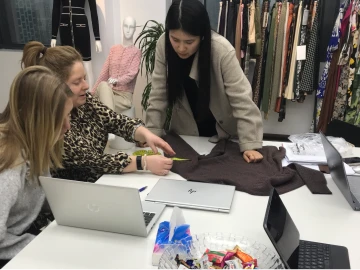
Small orders run on the same lines and the same process. A low-MOQ order is not a shortcut trial — it goes on the same machines, through the same inline and final inspections, with the same label and packaging standards as bulk. What changes is the quantity and the yarn terms, not the process. See the Quality Control page for what inspection actually covers.
What your artwork will and will not knit into
| Route | Techniques available |
|---|---|
| Cut-and-sew (fabric route) | Digital print, screen print, embroidery, heat transfer, jacquard fabric, washing and distressing, tie-dye |
| Sweater (fully-fashioned route) | Stitch structures such as cable, jacquard, intarsia, twist and rib, plus post-garment embroidery and panel-level print |
| Artwork type | Cut-and-sew (fabric route) | Sweater (fully-fashioned route) |
|---|---|---|
| Logo / geometric shapes | Print or embroidery both reproduce cleanly, with sharp edges, good colour accuracy and flexible placement in small areas | Intarsia or jacquard reproduces these cleanly, with the best edge definition |
| Large lettering | Print and embroidery have no stroke-width limit and can reproduce weight and outlines | Machine jacquard handles this well, subject to a minimum stroke width |
| Fine lettering | Digital print reproduces down to a very small point size; embroidery has a minimum size, so below a few millimetres print is the better route | Below a certain stroke width the yarn cannot hold the shape, so post-garment embroidery or print is the better route |
| Photographs / gradients | Digital print reproduces photographs and gradients in full | Not reproducible in a knitted structure. Consider post-garment print or embroidery, or reduce the image to a limited-colour jacquard |
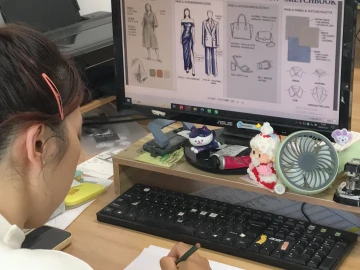
Tech pack checklist : Prepare the tech pack before production starts. A complete tech pack shortens the sampling cycle, because fewer questions come back mid-development.
Required on both lines : Construction sheet,Measurement chart,Colour references,Workmanship details,Label requirements,Packing requirements,Delivery window,Order quantity.
Add for cut-and-sew : Fabric specification (composition, gsm, width, shrinkage),Print and embroidery instructions with placement,Trim list.
Add for the sweater line : Yarn specification and count,Stitch-structure layout,Sweater size spec sheet,Weight requirements,Yarn colour cards,Linking and finishing (washing, milling, pressing) requirements. See jersey, rib and interlock structures for the full picture. Lorem ipsum dolor sit amet, consectetur adipiscing elit.
From Idea to Approved Sample
Available techniques: jacquard · intarsia · embroidery · cables and ribs. We cover seven to ten days for a first sample on a page of its own. See OEM and ODM development for the full picture.
| Step | Cut-and-sew (fabric route) | Sweater (fully-fashioned route) |
|---|---|---|
| Requirement review | Category, positioning and budget | Category, positioning and budget, plus weight tier and wearing season |
| Feasibility | What the fabric composition, weight and workmanship can achieve (print, embroidery, washing) | What the gauge (7GG–18GG) and yarn count can knit: cable, jacquard and intarsia, with a stitch swatch first |
| Specification lock | Fabric specification, measurement chart, workmanship sheet and tolerances fixed | Yarn count, weight, size spec sheet and stitch-structure layout fixed |
| Colour | Fabric dye samples (lab dip or bulk dye lot) confirmed, including viewing light and dye-lot variation | Yarn colour cards or colour references confirmed, including viewing light and dye-lot variation |
| Sampling | Marker and cut, then sew the sample; verify fit, sizing and sewing workmanship, keeping one piece before and one after washing | Program the flat-bed machine, knit the panels and link them into a first sample; verify weight, dimensions and linking neatness, keeping one piece before and one after washing |
| Sample review | Check fit, fabric hand-feel and construction against the tech pack | Check weight, dimensions, stitch reproduction and linking neatness against the spec sheet, and confirm washing shrinkage |
| Bulk confirmation | The signed sample becomes the production reference; bulk runs cut, sew, finish and inspect, at 45–70 days for knit and 45–90 days for woven | The signed sample becomes the production reference; bulk runs knit, link, wash and mill, press and inspect, 30–55 days from order confirmation |
Eight Mistakes That Cost Time and Money
Available techniques: jacquard · intarsia · embroidery · cables and ribs.
1.Designing the artwork before deciding the product.
2.Assuming fine lettering will knit cleanly.
3.Choosing yarn by softness alone and ignoring weight and resilience.
4.Treating a digital rendering as a stand-in for a physical sample.
5.Ignoring wash and pressing shrinkage when setting measurements.
6.Specifying a gauge that doesn't match the yarn count.
7.Changing label requirements only after bulk is confirmed.
8.Planning delivery windows with no time reserved for sampling.
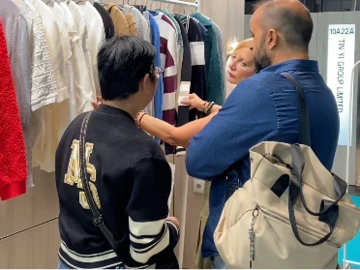
Before production starts, get your tech pack ready. The checklist: construction sheet, measurement chart, yarn spec, color references, stitch details, label requirements, packaging requirements, delivery window, and order quantity. A complete tech pack means fewer surprises and a shorter sampling cycle.
Three mistakes specific to the sweater line
- Judging a sweater by cut-and-sew fabric-weight experience. Sweater weight is set by yarn count and stitch structure together, and the same yarn count in a different structure can nearly double the weight. Go by a knitted swatch.
- Looking only at the greige sample and not the washed state. Milling and washing change weight, dimensions and hand-feel at the same time, so the first sample must be checked once before and once after washing.
- Overlooking linking neatness. Linking is a key operation for the look and durability of a sweater, and it must be a separate check at sample review, not something judged on the body panels alone.
start your first order today?
→ Talk to your dedicated managerCustom Design Faqs
Q : Can you work with us if we have no design team?
A : Yes. In ODM mode our design team develops the collection from your brief.
Q : Can this photograph be produced?
A : On the cut-and-sew line, yes: digital print reproduces photographs and gradients, and screen print suits a limited number of colours. On the sweater line, no, it cannot be reproduced as a knitted structure. The feasible range is in the artwork table above.
Q : How many sample rounds does it usually take?
A : Most styles are approved within two rounds; a complex jacquard may take three.
Q : Who owns the sample?
A : Once the sampling fee is settled, the sample is yours as a development reference.
Q : Can you copy a competitor garment we already own?
A : Send us the physical garment. We can assess construction, gauge and yarn, subject to it not infringing a protected design.
Q : Will bulk match the sample exactly?
A : The signed sample is the production reference. On the cut-and-sew line there is dye-lot and roll-to-roll variation and print batch variation; on the sweater line there is yarn dye-lot variation. Agreeing the acceptable range and the lot-mixing rule when the order is placed saves an argument later.
Q : Is the sampling fee refundable?
A : The sampling fee stays free for long-term clients.
Q : What if we only like part of the proposal?
A : Development is iterative. Styles can be dropped or changed before sampling, and you do not have to accept the whole proposal.
Q : Do sweaters and knit cut-and-sew follow the same process?
A : No, they are different routes. Cut-and-sew starts with fabric (weaving, cutting, sewing); the sweater line starts with yarn and stitch structure (flat-bed knitting, linking, washing, pressing). Both are laid out in the step table above, where the step names are the same but the content differs.
Q : How many rounds does sweater sampling take?
A : As with cut-and-sew, most styles are approved within two rounds; a complex intarsia or jacquard may take three. Running the stitch swatch first clearly reduces the number of full-garment sampling rounds.
Q : Will bulk sweaters vary in colour from the sample?
A : The signed sample is the production reference. When the yarn is dyed in separate lots there is a slight dye-lot variation between batches, so agree the acceptable range and the lot-mixing rule when the order is placed.
Q : Is the lead time for sweaters the same as for cut-and-sew?
A : Sweater knitwear is 30–55 days from order confirmation; knit cut-and-sew is 45–70 days and woven is 45–90 days. For complex jacquard and intarsia, allow one extra week in the delivery window. From there, send your artwork for a sampling quote.
START A PROJECTReady to Build Your Next Collection?
Tell us about your project
a specialist replies with a tailored quote and timeline. No account needed.
Typical reply confirm SLA
Export countries
Low MOQ (pcs)
You can send your tech pack, and we will come back within 24 hours.