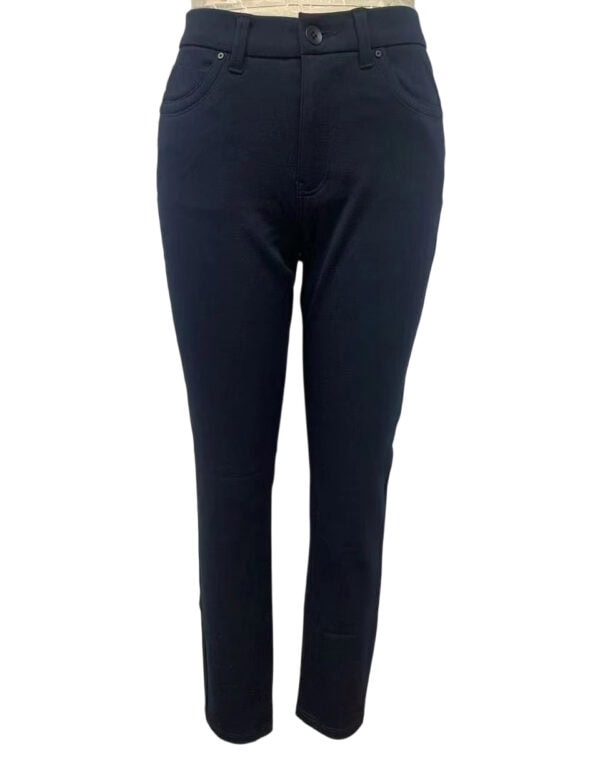
Custom Trousers & Shorts Manufacturer
Pants are the hardest category in womenswear to get right, mostly because fit expectations differ so much between markets. A trouser that reads as high-rise in Europe can sit a full inch lower than what a North American buyer calls high-rise. We build to your block, not to a house guess.
There are currently 30 styles in this category covering wide-leg, tapered, straight, jogger, cargo and slim fits in stretch woven, twill, corduroy and knit constructions. MOQ is 50 pcs per style, sizes mixed within that quantity, and we quote with rise, leg opening and inseam against your spec rather than our own.
Key facts
| MOQ | 50 pcs per style (sizes mixed) |
|---|---|
| Sampling | 7–10 days when fabric is available |
| Bulk lead time | 45-90 days for woven, 45-70 days for knit |
| Payment | 1. 20% deposit, 80% balance by T/T or L/C at sight 2. Credit terms (subject to credit limit approved by SINOSURE) |
| 21 years | in cut-and-sew and knitwear, one account manager per buyer |
|---|---|
| 30+ markets | EU and North America core, regular shipments to the UK and Australia |
| 50 pcs | minimum per style, sizes mixed inside that quantity |
| 7–10 days | for a sample when the fabric is in house; 10–15 days when it has to be developed |
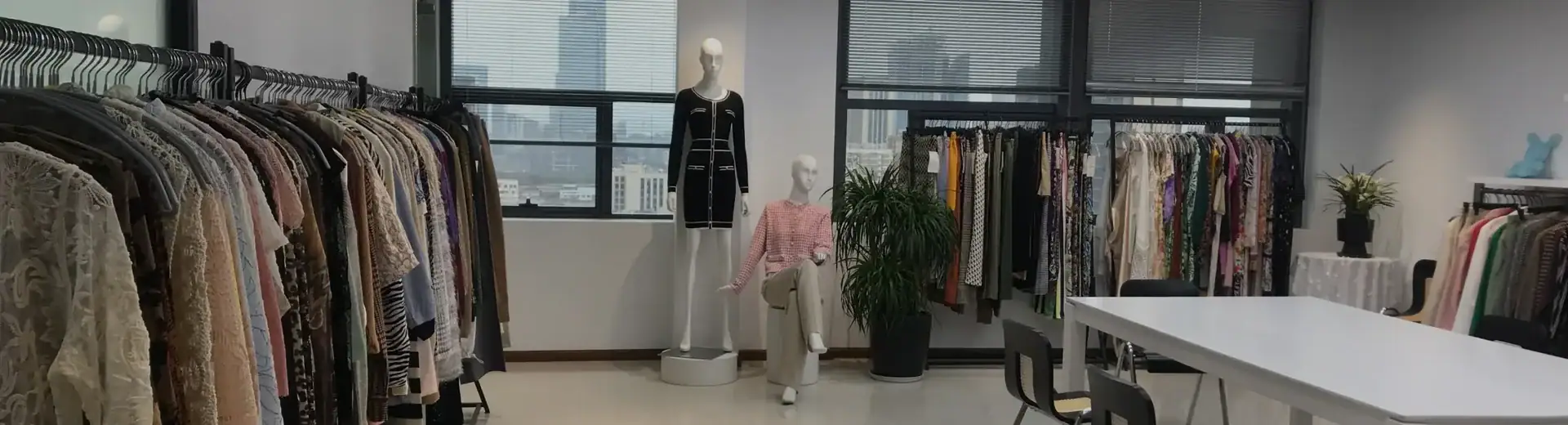
Two plants, one standard. Trousers and cut-and-sew run at our woven and knit plant; flat-bed knitwear runs at the sweater plant. Both work to one colour standard and one QC protocol, and one merchandiser follows your order across them.
Full detail: woven and knit cut-and-sew manufacturing in China.
Full specifications
What we cut in this category
- Wide-leg and pleated trousers
- Tapered and cropped pants
- Straight-leg tailored trousers
- Drawstring and elastic-waist joggers
- Cargo and utility pants
- Slim-fit office trousers
- Tailored shorts and drawstring shorts
Six fits below, each linked to a style we currently run. Fabric and construction notes are the ones that decide whether the fit holds in bulk.
| Wide-leg and pleated | Corduroy and 245 gsm plaid hold a pleat without a stiff interlining. Lining is quoted with the style, not added after. |
|---|---|
| Tapered and cropped | 280 gsm 4-way stretch keeps a cropped leg from riding up when sitting. The knee point is set with you, not by grade default. |
| Straight-leg | Ponte and twill both hold the line; the leg shape comes from the block rather than from fabric weight. |
| Jogger and elastic waist | Elastic channel plus drawstring. Recovery is where joggers fail, so the rib is wash-tested before bulk. |
| Slim-fit office | Crepe and fine twill read formal because they do not catch light. Pocket bags kept short so the seat stays clean. |
| Shorts | Same fit variables as trousers on a shorter inseam grade. Hem finish is confirmed before sampling because it changes the leg opening. |
| Constructions | Woven stretch · cotton twill · corduroy · knitted ponte |
|---|---|
| Typical fabrics | 96% polyester / 4% elastane · 63% polyester / 33% rayon / 4% elastane 280 gsm 4-way stretch · 52% lyocell / 45% cotton / 3% elastane · 100% cotton twill · 86% polyester / 12% lurex / 2% spandex 245 gsm |
| Fit variables | Front rise, back rise, leg opening, inseam, waist-to-hip ratio |
| Waist options | Clean waistband · internal stay · elastic channel · functional or decorative drawstring |
| Trims | Metal eyelets and hardware sourced nickel-free on request |
| Certificates | BSCI, OEKO-TEX and REACH; GRS where the certified recycled route is used, OCS where certified organic cotton is used; HIGG FEM self-assessment on request |
| Custom programme | custom clothing manufacturers in China |
How we make Trousers & Shorts: fabrics, construction and QC
How a trousers order moves through the plant
| 01 Block and pattern | Your block, or ours built from a garment you already sell. Front rise, back rise, leg opening, inseam and waist-to-hip ratio taken off the sample before anything is cut. |
|---|---|
| 02 Fabric inspection | Every roll checked on receipt for shade, width and shrinkage. Rolls that fail are not cut. |
| 03 Cutting | Plaid laid in matched blocks rather than stacked plies; corduroy and other pile fabrics laid one way up so the shade does not shift across the batch. |
| 04 Sewing | Lines assigned by construction rather than by style count, so fit does not drift between operators. Fly, pleats and pockets set in one operation each. |
| 05 In-line QC | Checked at the machine, not only at the end. Measurements taken on the first piece of every bundle, against your spec sheet. |
| 06 Pressing | Crease set only where you want it. Plaid and pile fabrics pressed on the reverse. |
| 07 Packing | Flat pack or hang, polybag or carton, 3PL-ready labelling, all confirmed with the PO. |
Seven steps in every order, at both plants, to one colour standard and one QC protocol. The step that most often goes wrong in this category is step 3: plaid and pile fabrics are where a batch stops matching itself.
Fit variables we agree before sampling
Before we cut a single sample we want five numbers from you: front rise, back rise, leg opening, inseam and the waist-to-hip ratio you’re fitting. If you don’t have them, take them off a garment you already sell and send us the measurements, and we’ll build the block from that.
Rise is where most disputes start. Tell us which market you’re selling into and we’ll flag discrepancies before sampling instead of after you receive a fit sample that sits wrong.
Fabric: stretch content drives comfort and recovery
Most trouser programs need some elastane. A 96% polyester / 4% elastane woven holds shape well for office styles. A 63% polyester / 33% rayon / 4% elastane at 280 gsm with 4-way stretch suits trousers that need to move and recover. Lyocell-cotton blends give a softer hand at a higher cost. Cotton twill works for casual bottoms; corduroy and crinkle textures sit in the same camp.
Recovery matters as much as stretch. Fabric that stretches and does not return gives you knee bagging and a customer who does not reorder. We wash-test candidate fabrics and tell you what we see.
Pockets, waistbands and hardware
Waistbands are built either clean or with an internal stay. Drawstrings can be functional or decorative, and decorative ones need the channel finished properly or they read as cheap. Metal trims and eyelets are sourced to nickel-free requirements when you are shipping to the EU or UK.
Pocket depth is another quiet returns driver. If your customer carries a phone, say so and we will set the pocket accordingly.
Measuring a pair before we publish a size chart
| Waist relaxed | Across the top edge, garment flat, no stretch applied. |
|---|---|
| Waist stretched | Pulled to the maximum the elastic gives, so the fit range is explicit rather than implied. |
| Hip | At the widest point, a fixed distance below the waist so front and back numbers stay comparable. |
| Front rise | Waist seam to crotch seam, front. |
| Back rise | Same on the back. Back rise decides whether the trouser sits or pulls. |
| Thigh | Across one leg, 1 inch below the crotch. |
| Knee | Across the leg at the point you will actually cut the taper. |
| Leg opening | Across the hem, finished. |
| Inseam | Crotch seam to hem, along the inside leg. |
Every category page on this site will carry a real size chart once we have measured the base size. Until then, these are the nine points we measure, and we will take them on your size run rather than ours.
What drives the price
| Fabric | The largest line in the cost. 280 gsm 4-way stretch costs more per metre than a 96/4 basic; lyocell blends more again. When a quote moves, we tell you which line moved. |
|---|---|
| Construction | Seam count, pleats, lining and pocket bags. A lined pleated trouser takes longer on the line than a pull-on jogger at the same fabric cost. |
| Trim | Metal hardware, drawcord ends, nickel-free eyelets, custom labels. A small line, and the one buyers most often cut and then regret. |
| Order size and colourways | 50 pcs in one colour is priced differently from 50 pcs across four colours, because of cutting time and dye-lot handling. |
| Testing and certification | Where you need REACH or OEKO-TEX documentation to travel with the goods, testing is quoted into the price rather than added later. |
We quote per style against your spec, so two enquiries that look the same can land 40% apart on fabric alone. Ask us which line moved if a quote comes in above your target, and we will tell you what can come out without losing the fit.
MOQ, sampling and lead time
50 pcs per style, sizes mixed inside that quantity. Sampling takes 7–10 days when fabric is available and 10–15 days when it has to be developed. Bulk knit trousers run 45–70 days and bulk woven runs 45–90 days, both counted after PP approval and fabric confirmation. Payment is 20% deposit, 80% balance by T/T or L/C at sight. First runs start at 50 pcs per style; volume comes later.
Documentation
Care labels, fibre composition and origin labels produced to your requirement. EU shipments follow Regulation (EU) 1007/2011 fibre-composition labelling. Certificates are available on request with scope confirmed for your destination.
Questions buyers ask
What is your MOQ for trousers and shorts?
50 pcs per style, with sizes mixed inside that quantity. Colourways of the same style are quoted case by case.
Can you work from my measurements rather than yours?
Yes, and we prefer it. Send front rise, back rise, leg opening, inseam and waist-to-hip ratio, or send a garment you already sell and we will build the block from it.
How do you handle rise differences between markets?
Rise definitions vary between Europe and North America, so we confirm what you mean by high-rise before sampling rather than assuming. Flagging it early avoids a fit round later.
How much stretch should I use?
Enough to recover, not just enough to stretch. We wash-test candidate fabrics for recovery because poor recovery shows up as knee bagging after wear. We will recommend a blend based on how structured you want the trouser to look.
How is a trousers order inspected?
Every piece is inspected by default. Where a buyer specifies AQL 2.5, we run sampling inspection to that standard instead, against ISO 2859-1, and the report is issued with the goods.
Do you make shorts on the same line?
Yes. Shorts run on the same woven lines with the same fit variables agreed in advance. The detail behind fusing and measurement checks sits on a separate page. You can request a quote for this category, and we will come back within 24 hours.
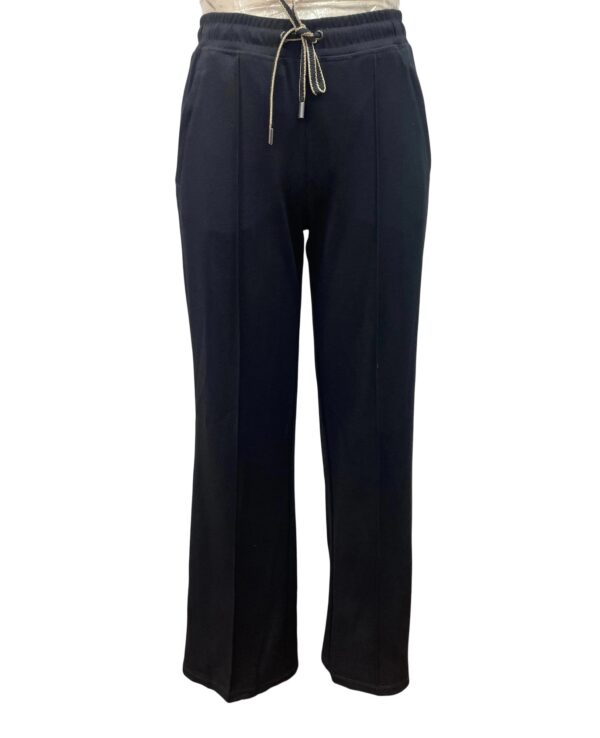
Black Drawstring Waist Straight Leg Casual Pants
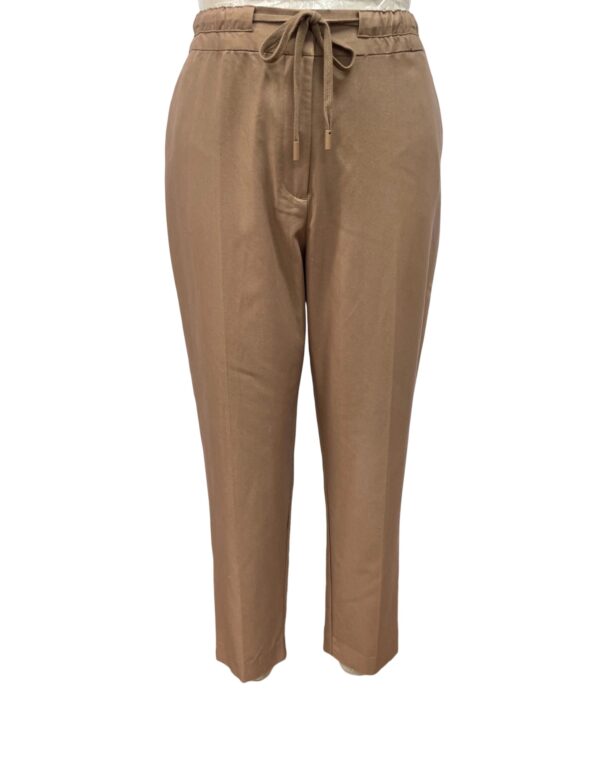
Camel Drawstring Waist Cropped Tapered Pants
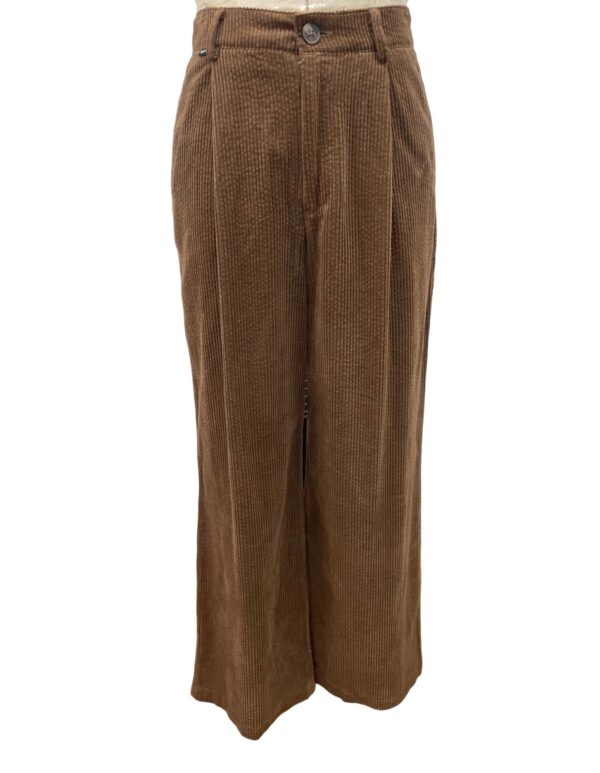
Brown Corduroy High Waist Pleated Wide Leg Pants
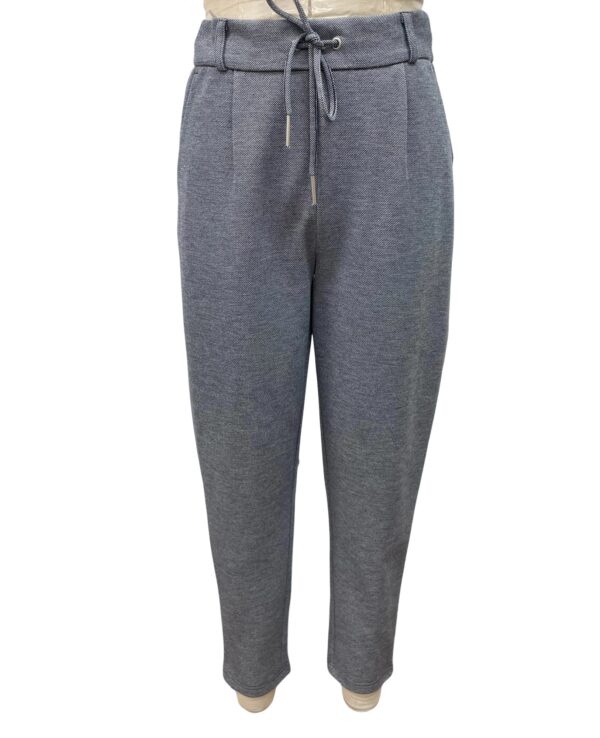
Heather Grey Drawstring Waist Tapered Cropped Pants
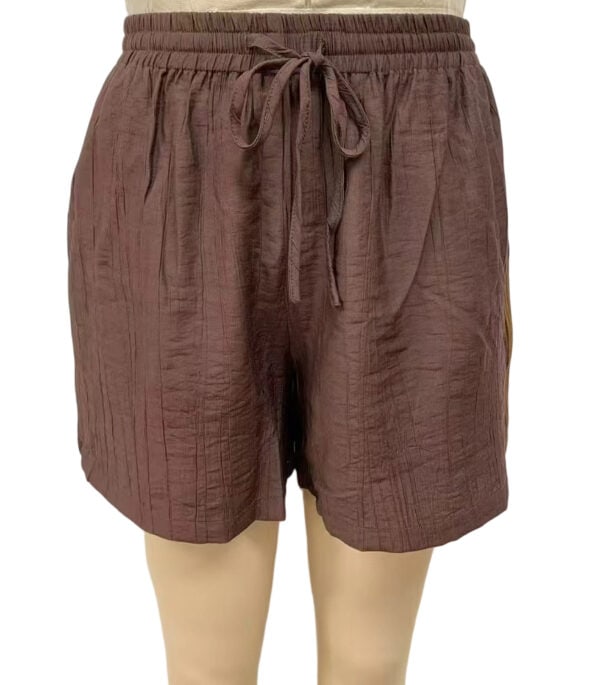
Brown Textured Drawstring Waist Shorts
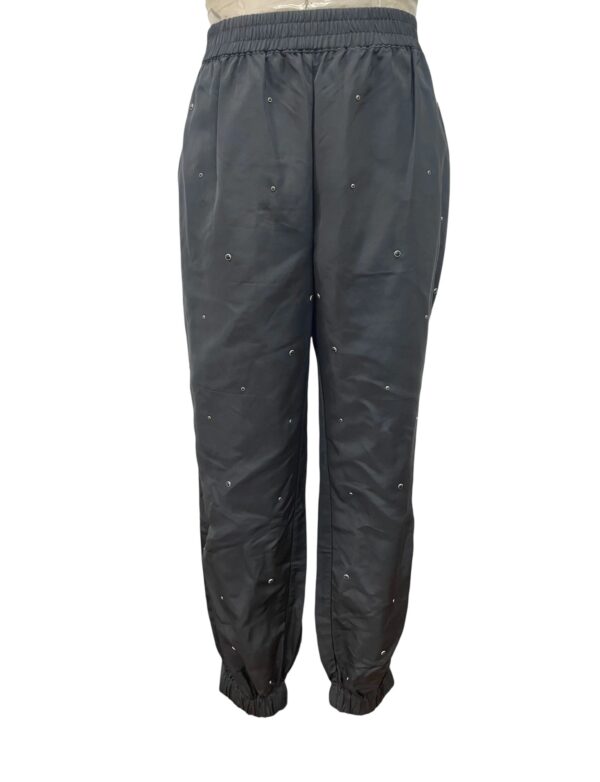
Black Studded Elastic Waist Jogger Pants
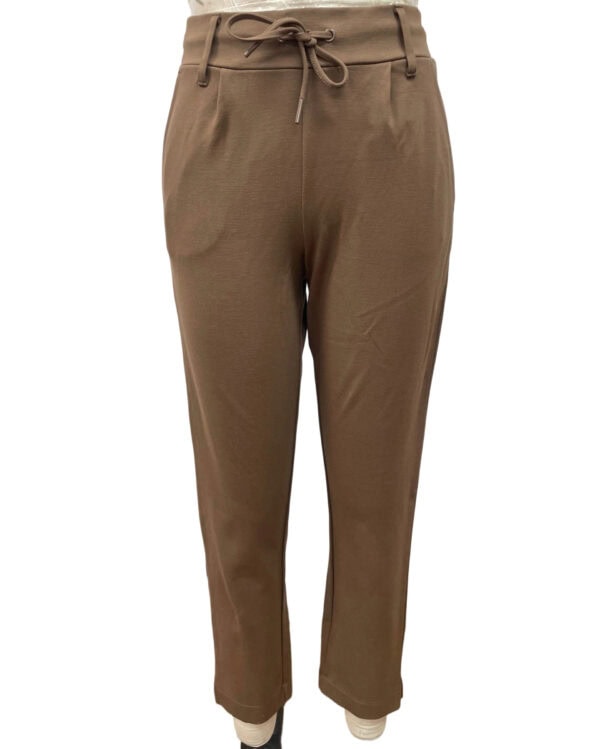
High Waist Drawstring Tapered Casual Pants
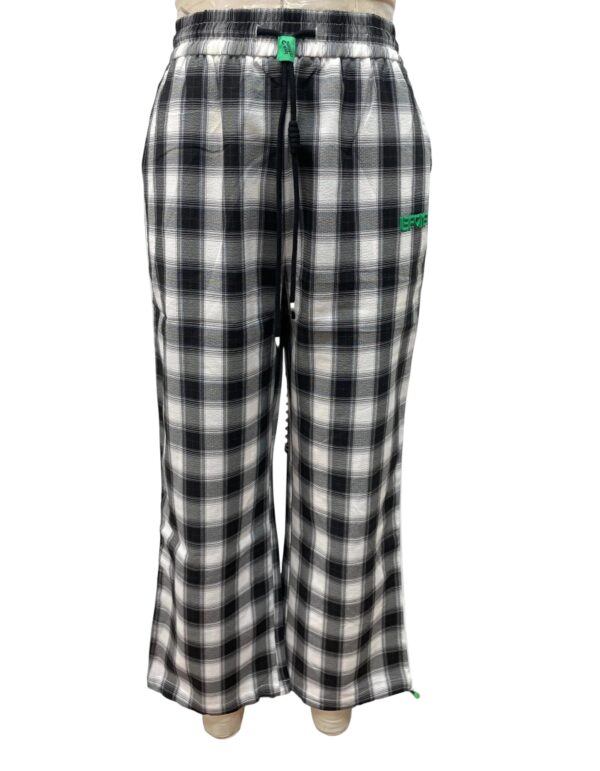
Black & White Plaid Drawstring Wide Leg Pants with Green Accents