What Sustainable and Certified Clothing Manufacturing in China Actually Covers
Sustainability claims are easy to print and hard to verify. This page sets out what we actually hold, what each certificate covers, and where the certified routes start and stop. It is written for compliance and sourcing teams who need the scope before the marketing.
1. What sustainable manufacturing means on a production floor
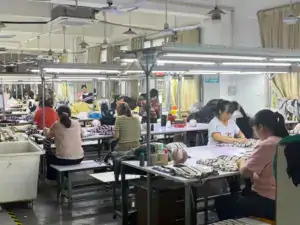
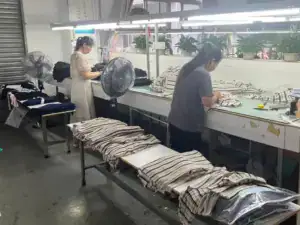
Sustainable manufacturing is not a badge. On a production floor it is a set of decisions that show up in the order file: which yarn route the style runs on, how fabric waste is handled, which chemicals enter the dyehouse, how the audit is scheduled, and what documentation travels with the shipment. We run two plants in Ningbo: knit and woven cut-and-sew in one, flat-knit sweaters in the other. Both run to one colour standard, one QC process, and one merchandiser who owns the programme end to end.
For a buyer, the practical question is not whether a factory says it is sustainable. It is which certificate follows the goods, and what happens when a style does not run on a certified route. Both cases are covered below.

2. Certifications we hold, and what each one covers
| Standard | What it covers | How it applies to your order |
|---|---|---|
| BSCI | Social compliance audit of the facility | Held as a facility-level audit. Report scope available at enquiry. |
| OEKO-TEX | Chemical safety of textile products | Held. Relevant to skin-contact categories, including kidswear. |
| REACH | EU chemical regulation compliance | Held as a compliance standard for export to the EU. |
| GRS | Recycled content in the yarn and the chain of custody | Route-based. Where a certified recycled yarn route applies, the GRS transaction certificate is issued with the goods. |
| OCS | Organic content in the fibre and the chain of custody | Route-based. Where the certified organic cotton route applies, the OCS transaction document is issued with the goods. |
| HIGG FEM | Facility environmental module | Self-assessment, not a certificate. We state it as what it is. |
Two points buyers ask about often. First, the badge wall: certificate numbers, validity dates and the certification body are provided per order at quote stage, against the legal entity that holds them. Second, what none of these documents do: they remove compliance risk. They do not tell you whether a seam holds or whether the measurements are right. That is what the inspection section below covers, with written reports at each stage and access for your own inspector before shipment.
3. GRS-certified recycled materials: the certified route
Recycled-content claims are supported under GRS. Where a certified recycled yarn route is used for your style, the GRS transaction certificate is issued with the goods. In practice that means the recycled polyester or recycled blend for that style is bought on the certified chain, booked against the order, and documented at shipment.
It also means the claim is ordered by style, not applied across a catalogue. A programme that mixes recycled and conventional yarns will ship with certificates on the styles that ran on the certified route, and with plain documentation on the rest. We would rather show you that split than round it up. If your line needs GRS-certified recycled materials across every style, say so at enquiry and we will build the yarn plan around it.
4. OCS organic cotton: the certified route
Where the certified organic cotton route applies to your order, the OCS transaction document is issued with the goods. Organic cotton programmes work the same way as the recycled route: the fibre is booked on the certified chain, the style is marked, and the documentation travels with the shipment.
Buyers comparing standards sometimes ask about GOTS. Our organic content route is covered by OCS. If your brand or your retailer requires a specific standard beyond that, name it at enquiry and we will confirm what can be arranged against your requirement before sampling, not after.
5. Ethical manufacturing: social compliance at the plants
Ethical manufacturing sits on the social side of the file: working hours, wages, age controls, grievance channels, building safety. Our BSCI audit covers the facility level, and the report scope is available to buyers at enquiry. The two plants are separate operations under one standard, so a programme that runs styles through both plants is covered by the same audit framework and the same merchandising oversight.
What a social audit does not do is manage your order. That is the merchandiser’s job: one person owns the programme across both plants, from the first sample to the final inspection, so a compliance question and a quality question reach the same person.
6. Sustainable uniforms and programme supply
Uniform and corporate programmes are a natural fit for certified routes, because the quantities repeat and the specification is fixed. Recycled-polyester programmes run on the GRS route; organic-cotton programmes run on the OCS route. Both run across the same two plants with the same QC process.
Programme orders typically fix the fabric and trim spec in season one and repeat against it. We keep the yarn booking and the certificate scope on file, so reorders run on the same route and the documentation stays consistent across drops. Sustainable uniforms suppliers who quote only the garment price and not the route are quoting half the order.
7. How to verify a factory’s sustainability claims
If you are comparing suppliers, these checks separate documented routes from brochure language:
- Ask which certificate follows the goods, per style. Facility-level standards and product-level transaction certificates answer different questions. A factory that blurs the two has not checked.
- Ask for the certification scope at quote stage. Numbers, validity dates, and the certification body are supplied per order. What we do not publish on the site is the certificate holder’s legal entity, and you should expect any factory to show you that document before you place bulk.
- Ask what happens to styles that run outside the certified route. The honest answer is that they ship without a transaction certificate. A factory that claims everything is certified is either confused about scope or counting on you not asking.
- Separate compliance from quality. Certificates remove the compliance risk. They do not tell you whether a seam holds or whether the measurements are right. That is what the four inspection points are for, with written reports at each stage and access for your own inspector before shipment.
8. Sustainable manufacturing FAQ
Q: Which sustainability certifications do you hold?
A: We hold BSCI, OEKO-TEX and REACH. Where a certified recycled yarn route applies to your order, the GRS transaction certificate is issued with the goods. Where the certified organic cotton route applies, the OCS transaction document is issued with the goods. HIGG FEM is a facility environmental self-assessment, not a certificate.
Q: Are all your products GRS certified?
A: No. GRS covers orders that run on the certified recycled yarn route. Where that route applies, the GRS transaction certificate is issued with the goods. Recycled-content claims are supported under GRS, order by order.
Q: Do your certificates guarantee product quality?
A: No. Certificates remove the compliance risk. They do not tell you whether a seam holds or whether the measurements are right. That is what the four inspection points are for, with written reports at each stage and access for your own inspector before shipment.
Q: What is your inspection standard?
A: The default is 100% piece-by-piece full inspection before packing. Where a buyer specifies AQL 2.5 inspection, we apply AQL 2.5 sampling inspection as the alternative path.
Q: Do you make sustainable uniforms and programmes?
A: Yes. Uniform and programme orders run on the same two plants with the same QC process. Recycled-polyester and organic-cotton programmes are ordered by style, each on its own certified route, and the matching transaction document is issued with the goods.