
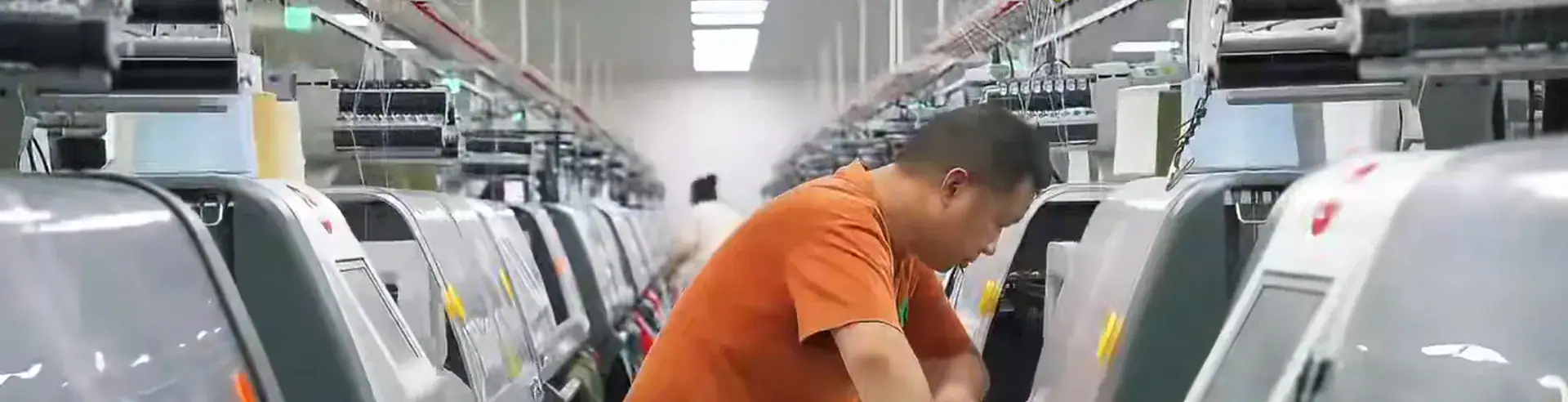
Clothing Manufacturing Capacity — Knit, Woven & Sweater Production Across Two Ningbo Plants
Two production lines, an in-house testing laboratory, and the equipment specifications behind every order we run.
| Location | Gauge range | Production lines | In-house lab | MOQ | Sampling |
|---|---|---|---|---|---|
| Ningbo, Zhejiang, China | Flat-bed 7GG – 18GG Circular 12G – 28G | Knitting & woven · Sweater | AATCC-aligned testing | 50 pieces per style | 7–10 days |
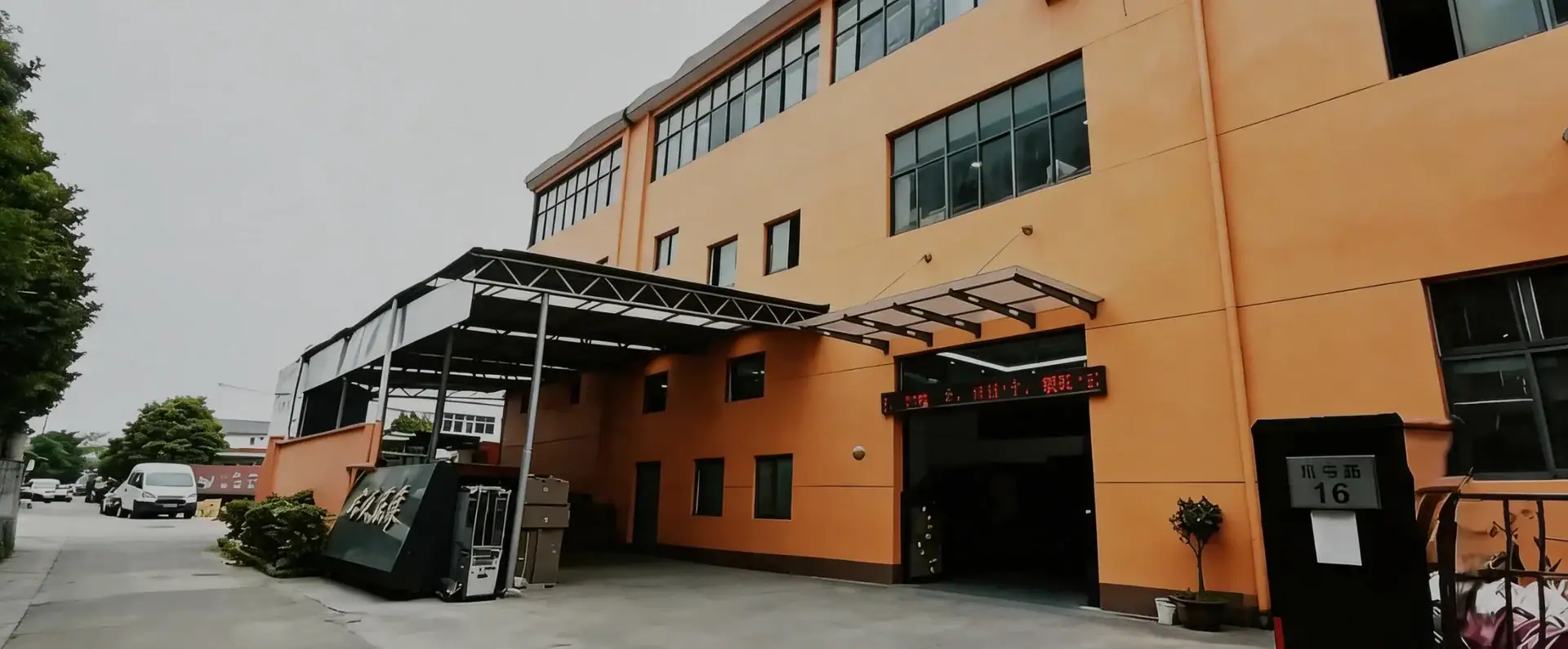

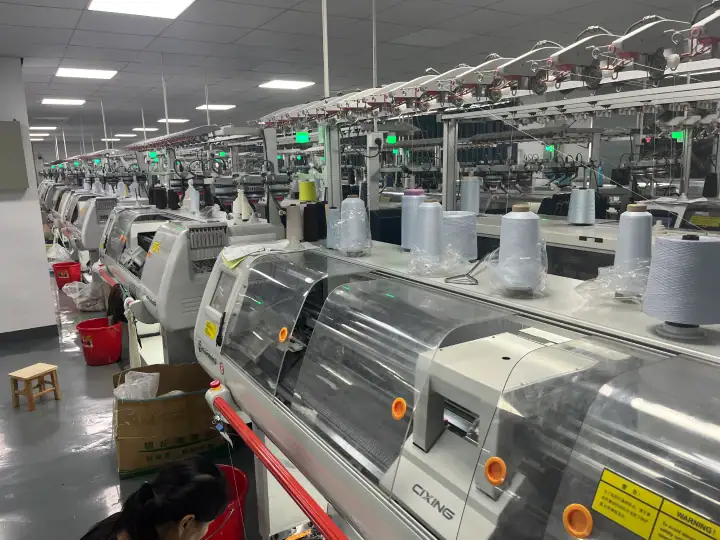
Our manufacturing strength is rooted in a dedicated development factory specialising in new product R&D and high-standard salesman samples. The line covers both knitted and woven construction, which is what allows a mixed-material range to run on one delivery window.
| Equipment | What it does for your order |
|---|---|
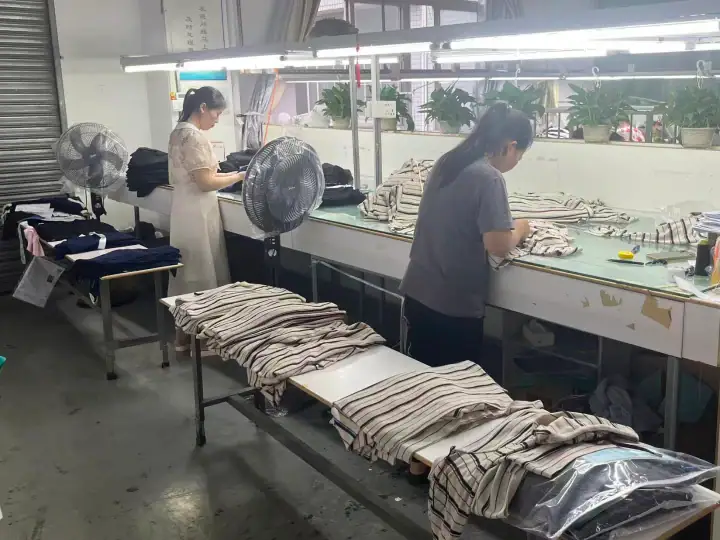
| Fabric inspection machines | Bulk fabric is checked before cutting, so a defect is caught before it becomes a garment. |
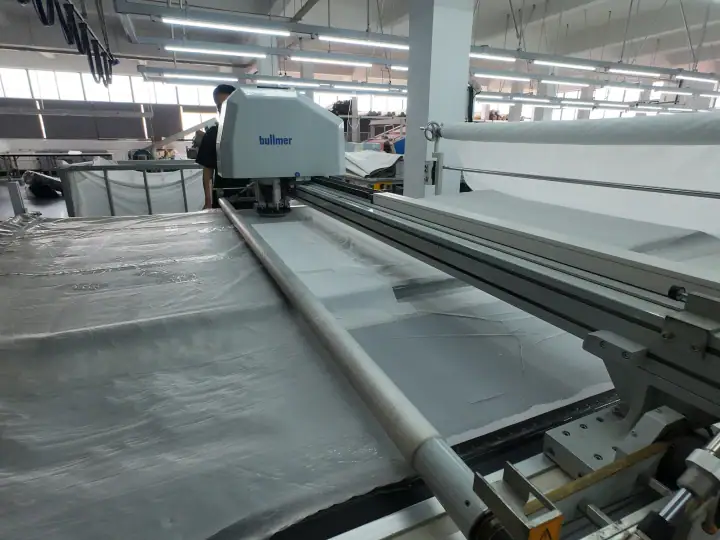
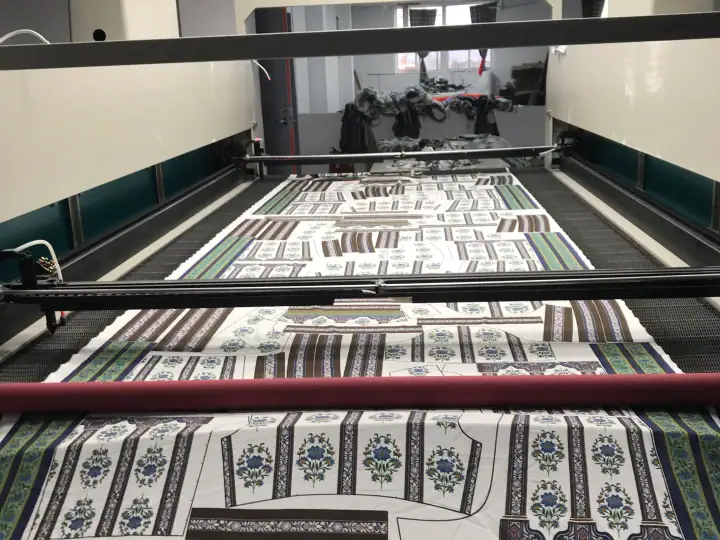
| High-speed automatic cutting beds | Cutting accuracy and output for woven styles and larger runs. |
| Automatic laser cutting beds | Clean edges on intricate shapes and synthetic fabrics that a blade distorts. |
| Intelligent hanging production lines | Piece-by-piece tracking through sewing, so work-in-progress and bottleneck stages are visible. |
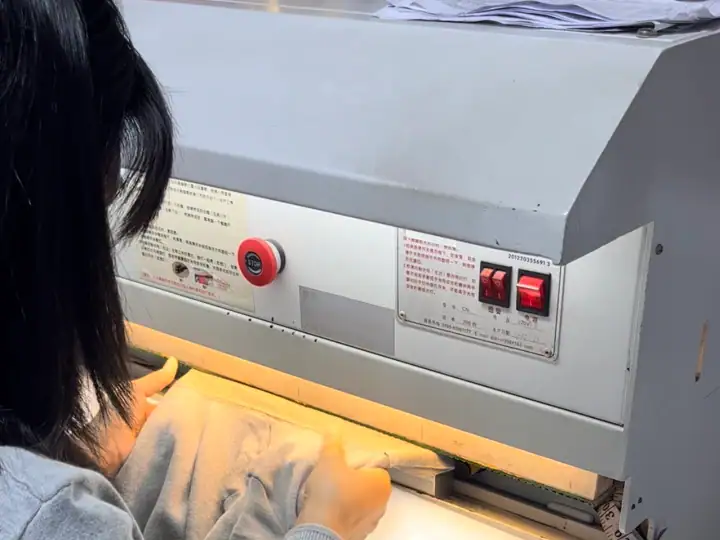
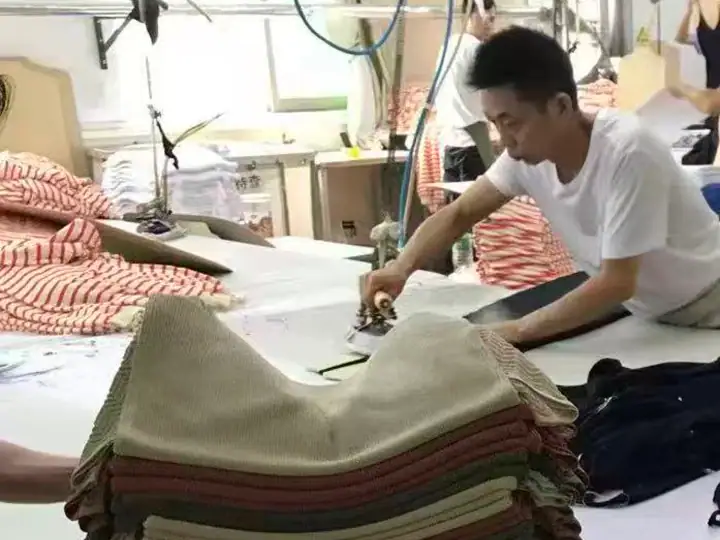
| Professional ironing machines | Consistent pressing, which is what holds a finished measurement after packing. |
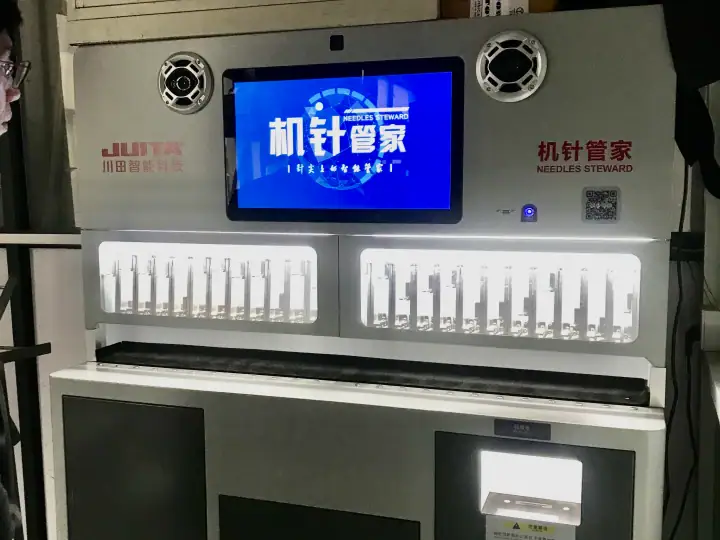
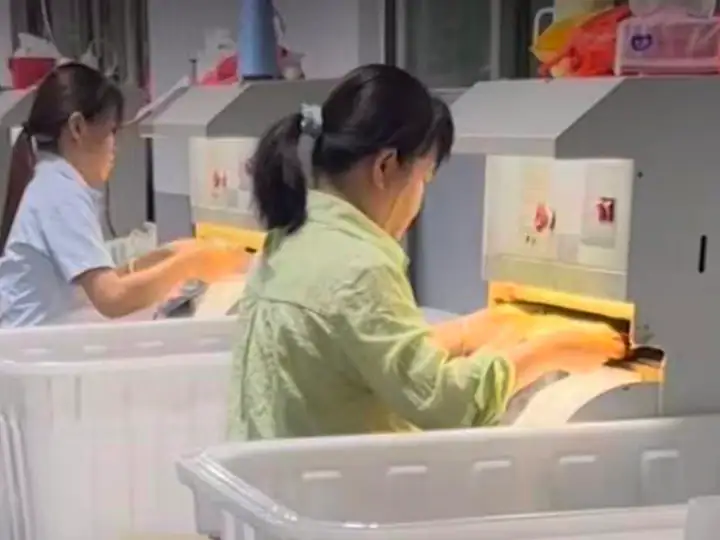
| Needle detection machines | Every finished garment passes through metal detection, a hard requirement for many retail buyers. |
| Flat-lock machines | Clean, low-bulk seams on knit and stretch fabrics. |
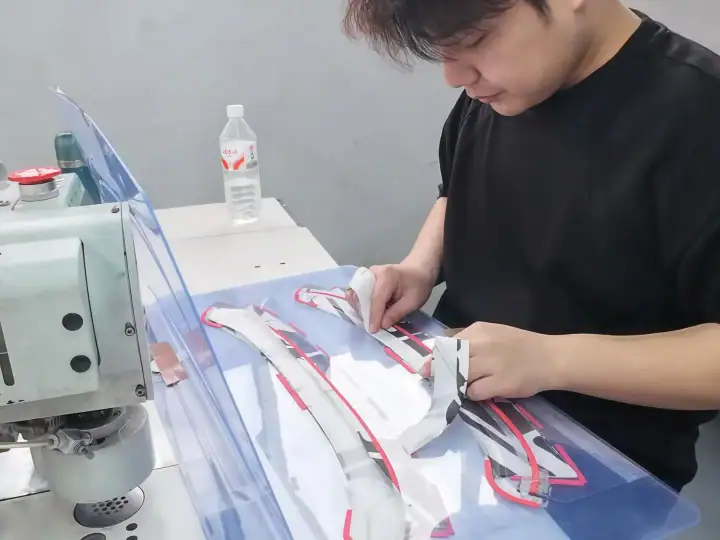
| Specialised template machines (collars, pocket openings) | Repeatable shape on the details that most visibly separate a sample from a bulk run. |
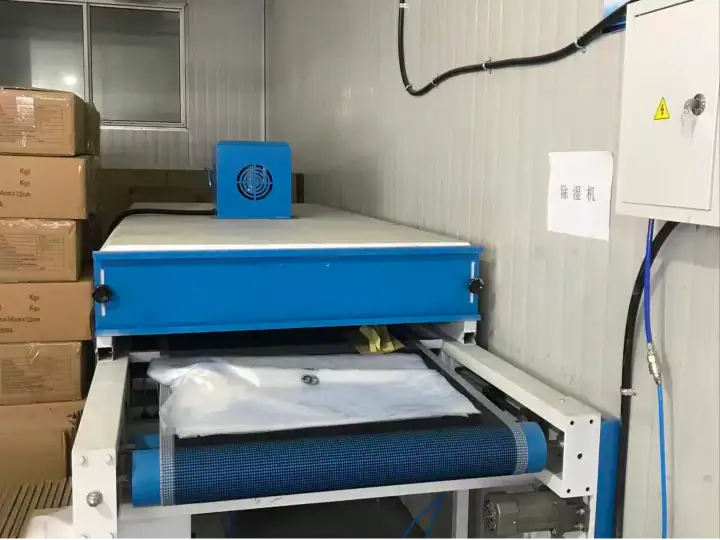
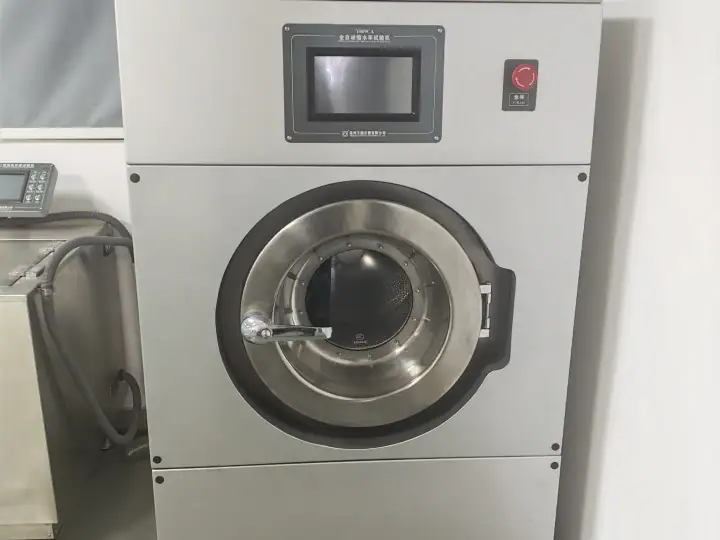
| Fabric pre-shrinking machines | Controls shrinkage and torquing before cutting, so the garment still measures correctly after washing. |
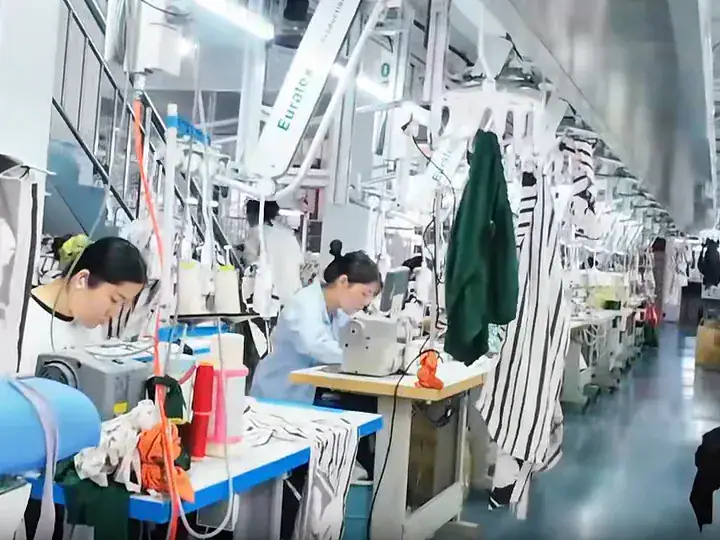
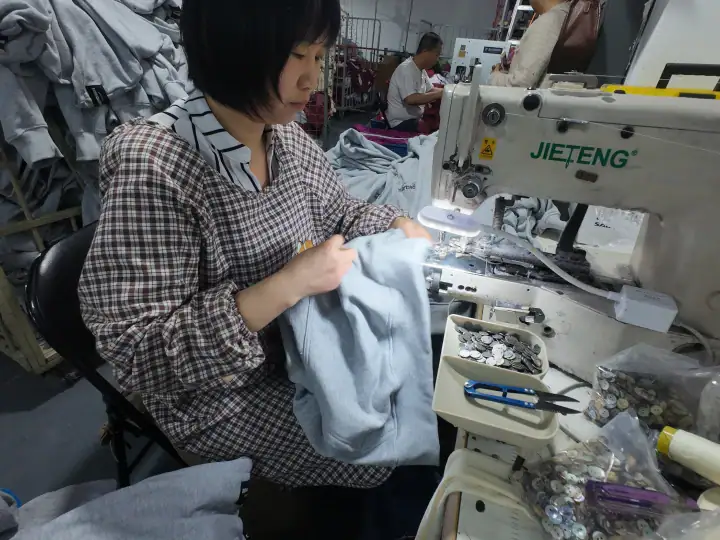
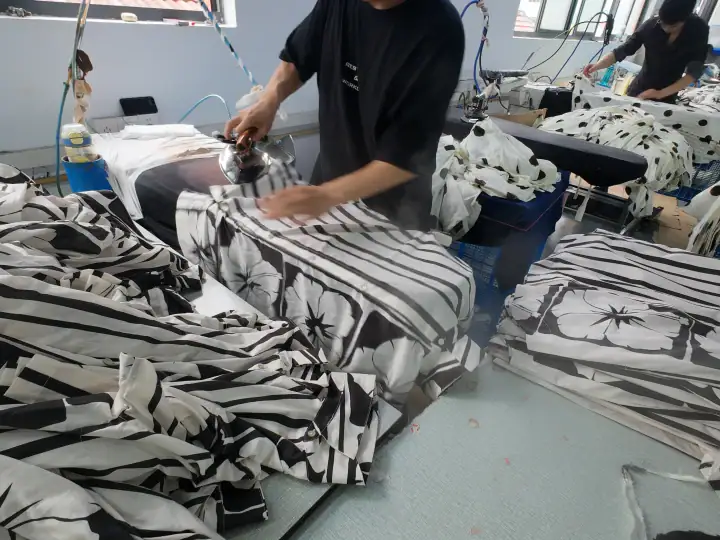
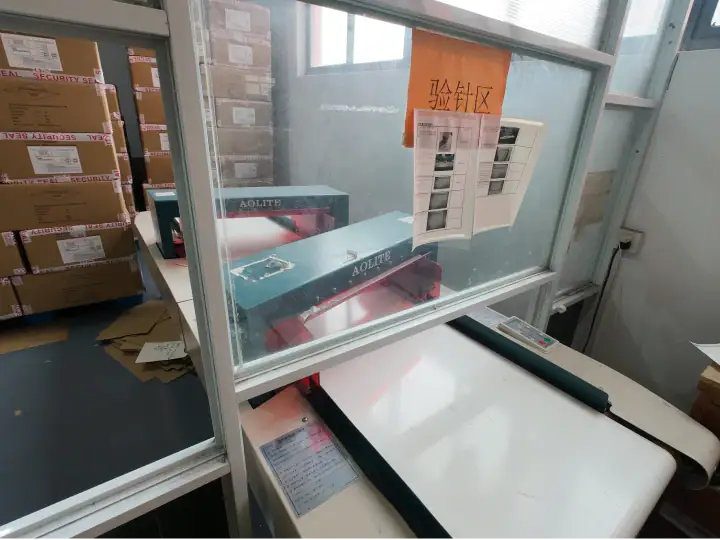
| Equipment | What it does for your order |
|---|---|
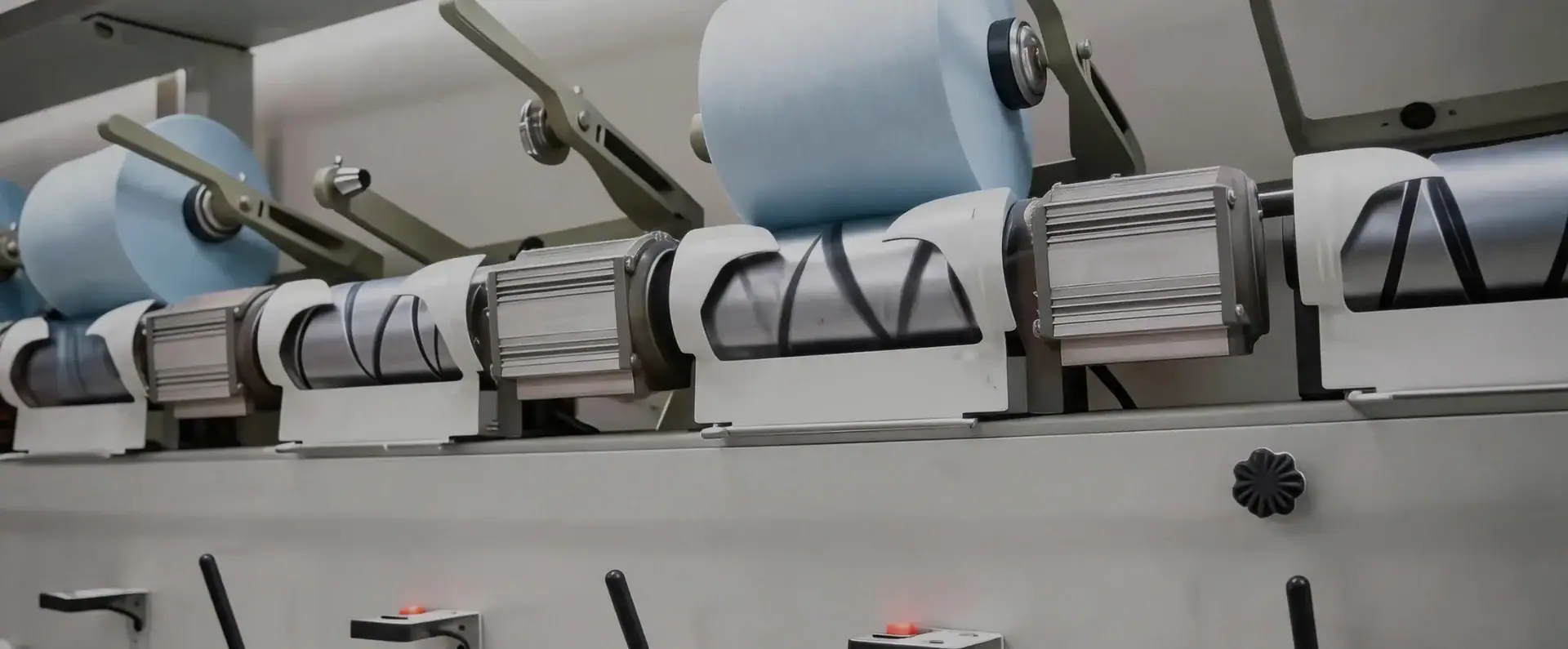
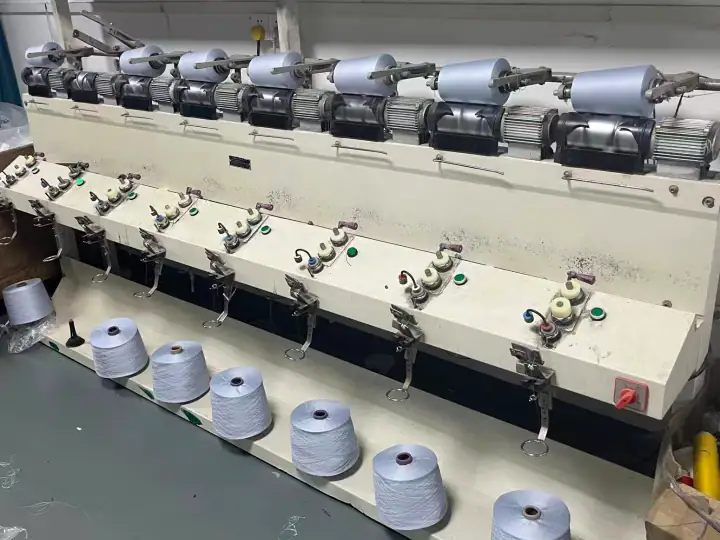
| 7GG – 18GG fully automatic computerized flat knitting machines | The gauge range that sets what a style can be, from chunky 7GG outerwear to fine 18GG knitwear. |
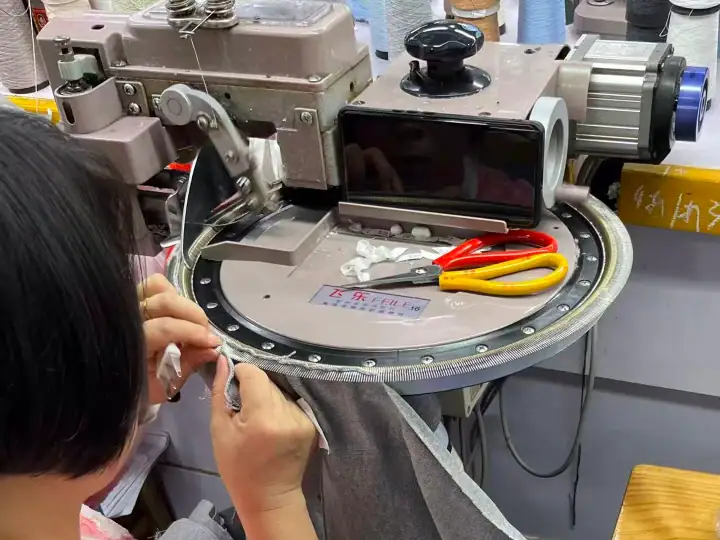
| Linking machines | Joins knitted panels stitch-for-stitch; the stage where a sweater's seam quality is decided. |
| Linking pull machines | Used on premium sweater assembly to eliminate loose or burst seams. |
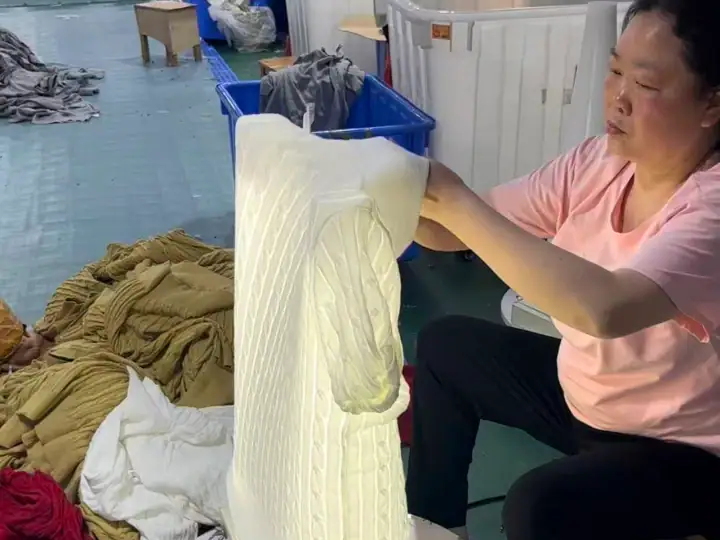
| Ironing equipment | Setting and pressing that fixes the final shape and measurement. |
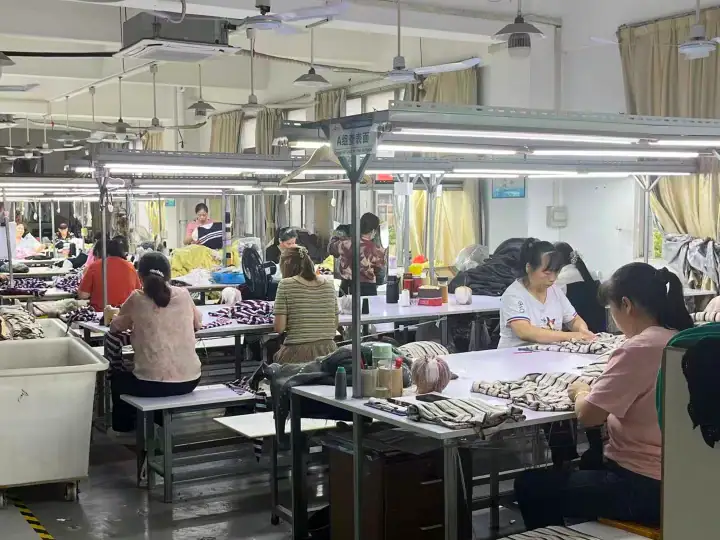
| Light-checking tables | Backlit inspection surface that reveals dropped stitches, float faults and thin spots. |
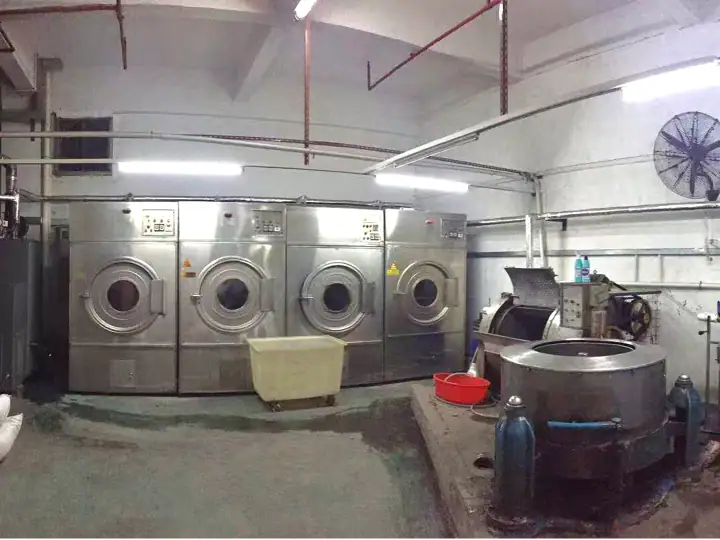
| Industrial washing and drying facilities | Full washing and softening capacity in-house rather than through a third party. |
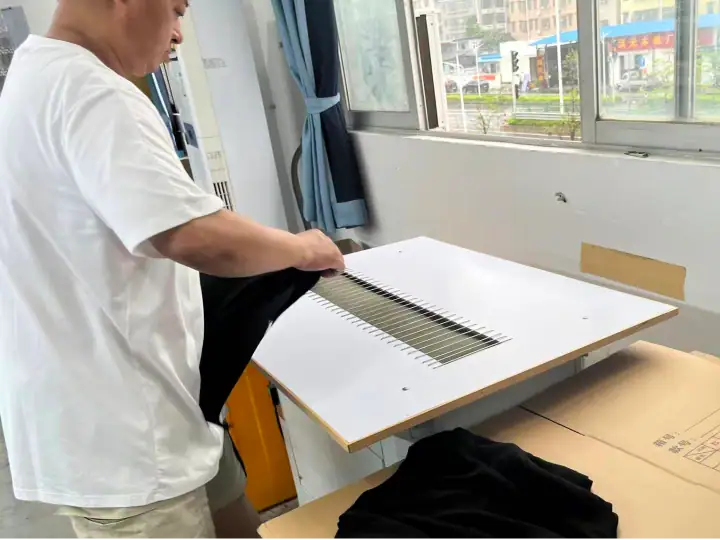
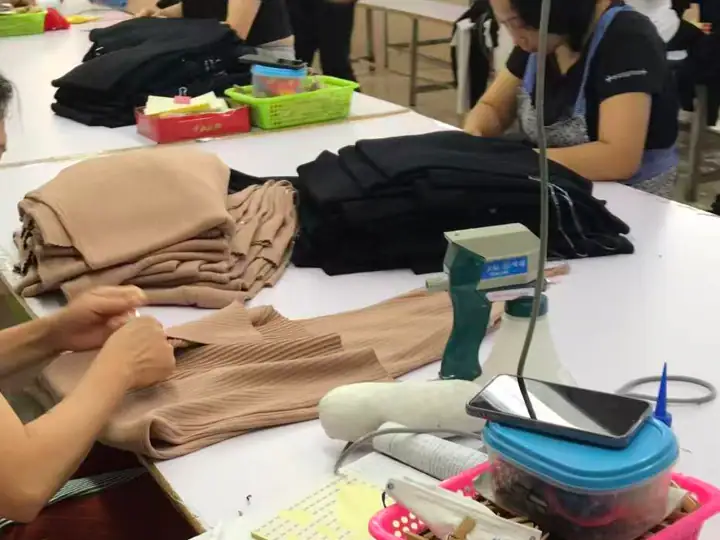
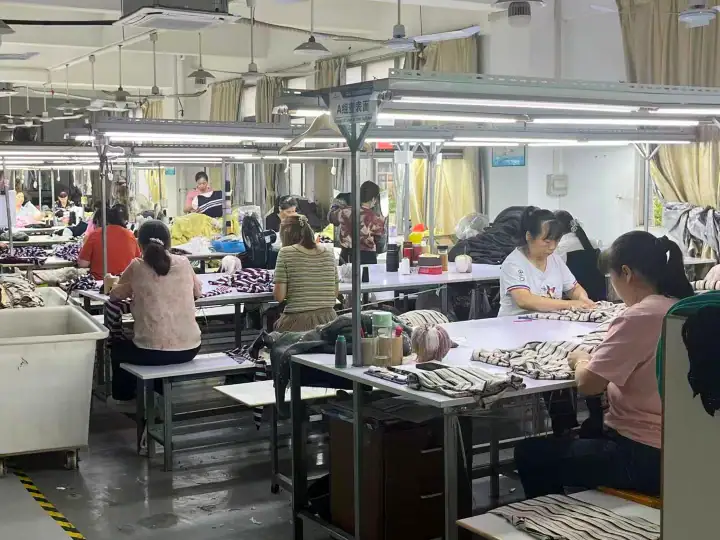
In-house laboratory and testing
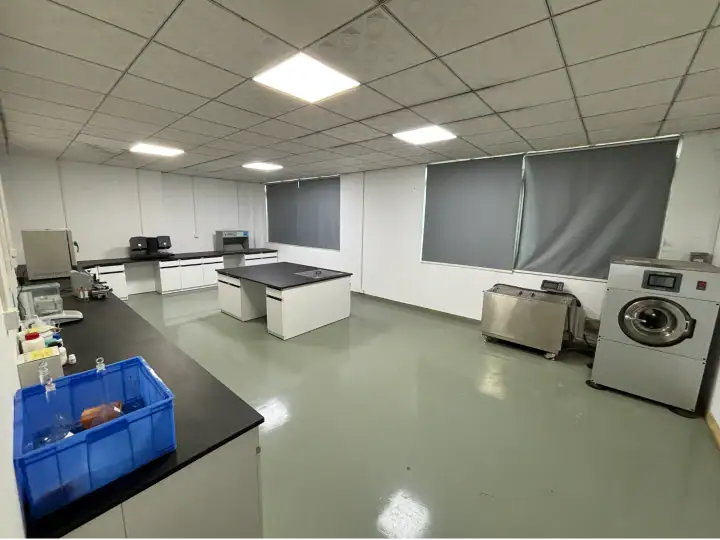
Testing happens on site rather than through a third party, which shortens the loop between a problem being found and being fixed.
The laboratory is established strictly to ISO standards and managed by senior technical personnel. All testing processes and equipment are calibrated on a regular schedule, so physical product performance is measured against AATCC international quality standards rather than an internal opinion.
| Test equipment | What it measures |
|---|---|
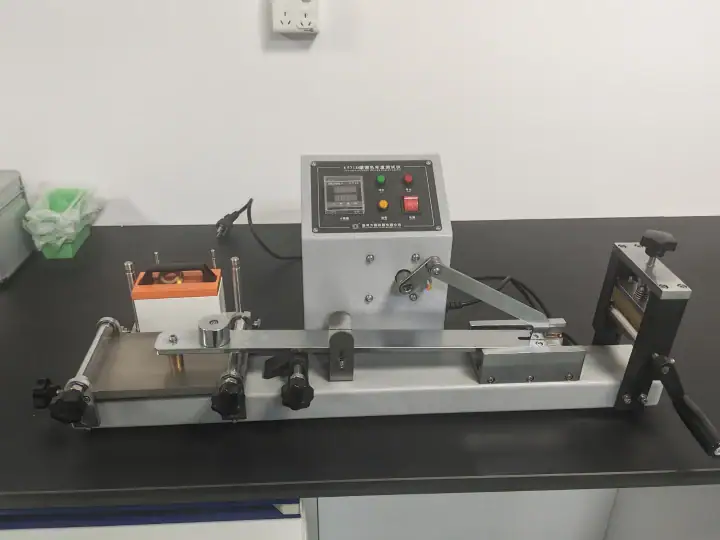
| Rubbing fastness tester | Colour transfer under rubbing, the failure that shows up as dye on a customer's clothing. |
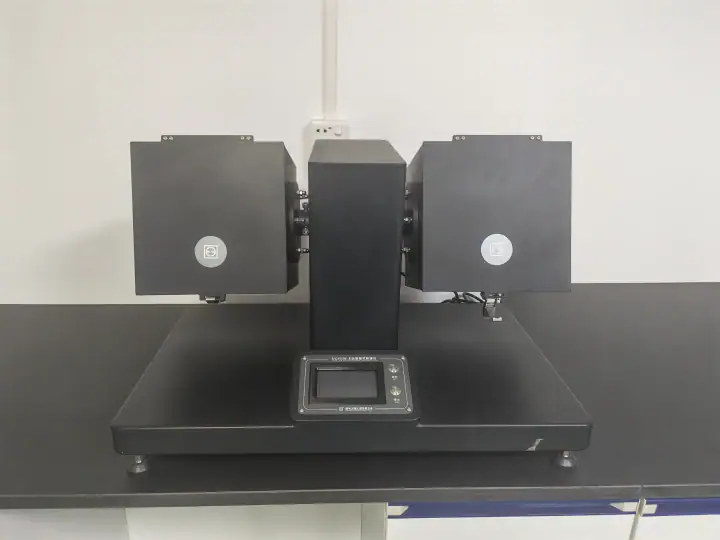
| ICI pilling box tester | Surface pilling and fuzz after abrasion, the main complaint on wool and blended knitwear. |
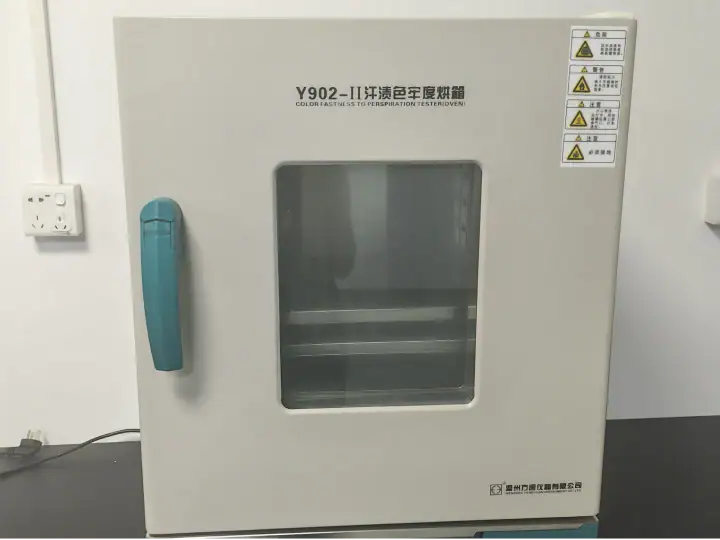
| Perspiration test oven | Colour fastness to perspiration, a market-entry requirement in several export markets. |
| Precision shrinkage tester | Dimensional change after washing, so a size chart holds after the first care cycle. |
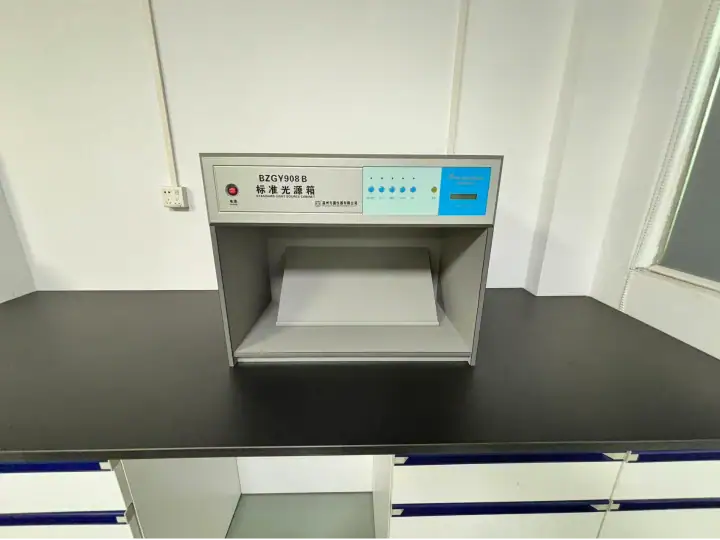
| Light box | Metamerism and colour matching under standard light sources, the check that prevents a colour dispute at delivery. |
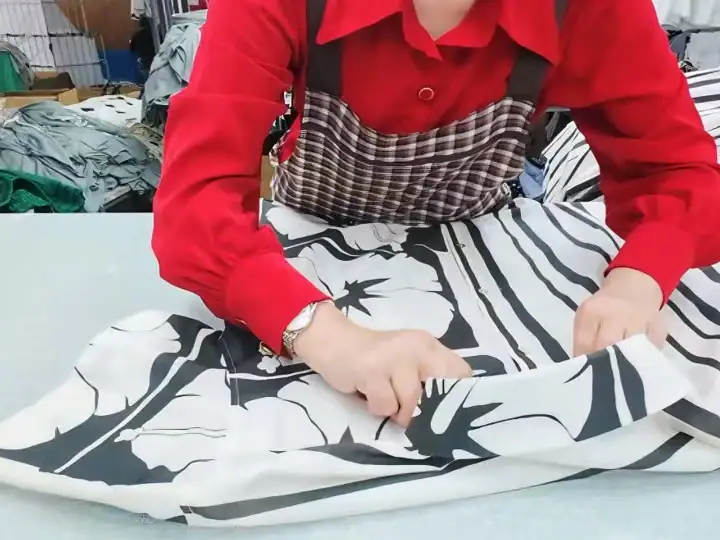
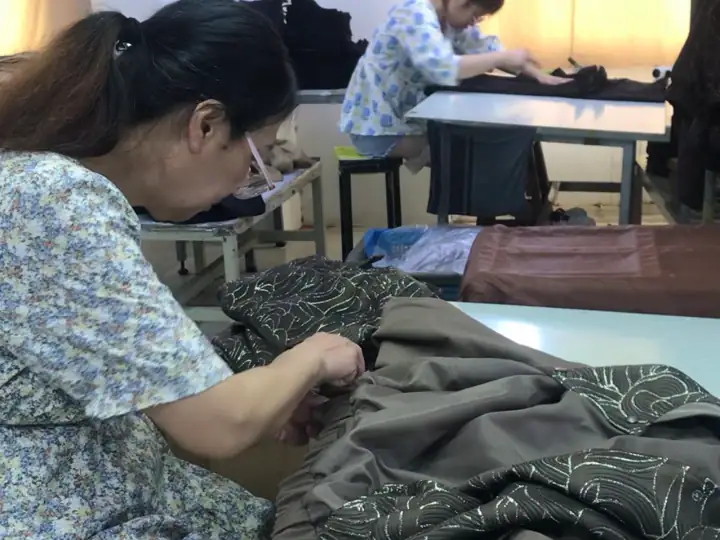
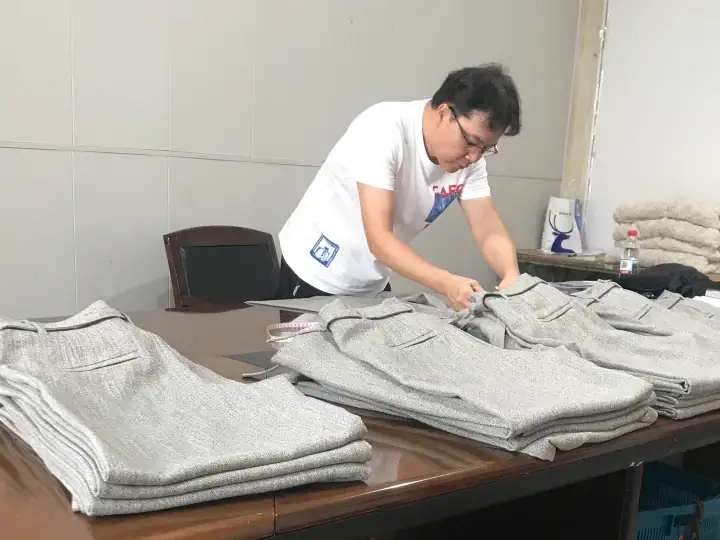
Quality Control
Full Inspection
-Point System
Color Matching
Regulatory compliance & certifications for EU and North American sourcing
Compliance is part of sourcing, not a final-step check. Both Ningbo plants run to the same documented standards, so a low-MOQ test run and a bulk order are judged by the same rulebook.
- BSCI - social-compliance audit coverage across both production plants.
- OEKO-TEX® Standard 100 - chemical safety verified on finished garments and key fabrics.
- REACH - EU chemical-regulation compliance for materials placed on the EU market.
- GRS (Global Recycled Standard) - recycled-content claims backed by GRS-certified recycled materials on the lines that run them.
- OCS (Organic Content Standard) - where the certified organic cotton route applies to your order, the OCS transaction document is issued with the goods.
Final inspection is 100% by default; where a buyer specifies AQL 2.5, sampling follows that level instead. See the Quality Control section for the full process.
Solutions & Case Studies
We provide comprehensive supply chain solutions focused on solving client pain points:
Premium Sweater Solutions
We utilize specialized equipment like linking pull machines to eliminate the risk of loose or burst seams. Additionally, we develop high-quality yarns and fabrics with superior anti-pilling performance (Grade 3-4), custom-tailored to meet premium brand specifications.
Woven & Knit Solutions
Our factory is equipped with advanced fabric pre-shrinking machines to optimize dimensional stability, ensuring that fabric shrinkage and torquing (skewing) remain strictly within the customer’s required tolerance range. We also implement mandatory needle-detection protocols using high-accuracy equipment to guarantee zero metal fragments remain in any finished garments.
Green & Sustainable Commitment
We deeply integrate EcoVero™ viscose and GRS-certified recycled materials into our production lines. This empowering approach helps global brands seamlessly fulfill their environmental and corporate social responsibilities (CSR) while fully maintaining premium fashion appeal.
Standard delivery schedule
| Stage | Standard lead time | Excludes |
|---|---|---|
| Sampling (first sample) | 7–10 days | Yarn or fabric lead time where not in stock |
| Bulk: knit garments, circular knit | 45–70 days after order confirmation | Yarn lead time, shipping transit |
| Bulk: woven garments | 45–90 days after order confirmation | Yarn and fabric lead time, shipping transit |
| Bulk: flat-machine sweaters | 30–55 days after order confirmation | Yarn and fabric lead time, shipping transit |
Visit or talk to us
We welcome factory visits, video walkthroughs and technical discussions before an order is placed. If you have a specification you want tested against this capacity, send it and we will tell you what is feasible.
→ Contact us → Where to meet us