
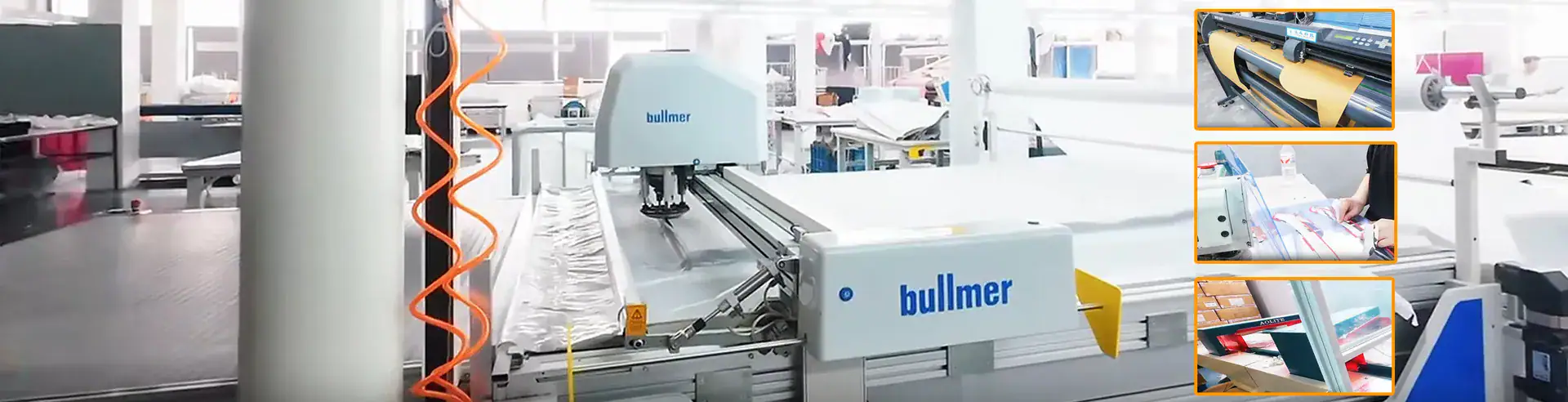
Circle Knitting & Woven Apparel Manufacturer in China
China · circular knit and woven cut-and-sew programmes · MOQ 50 pcs per style · samples in 7–10 days when fabric is available · knit bulk 45–70 days, woven bulk 45–90 days





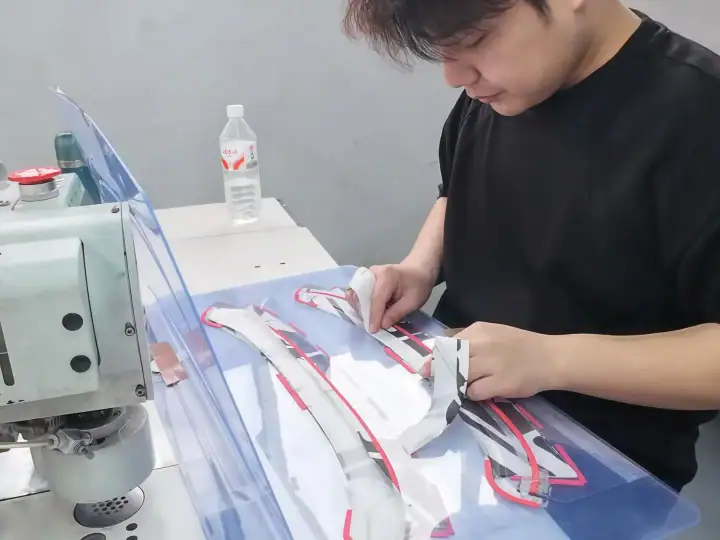
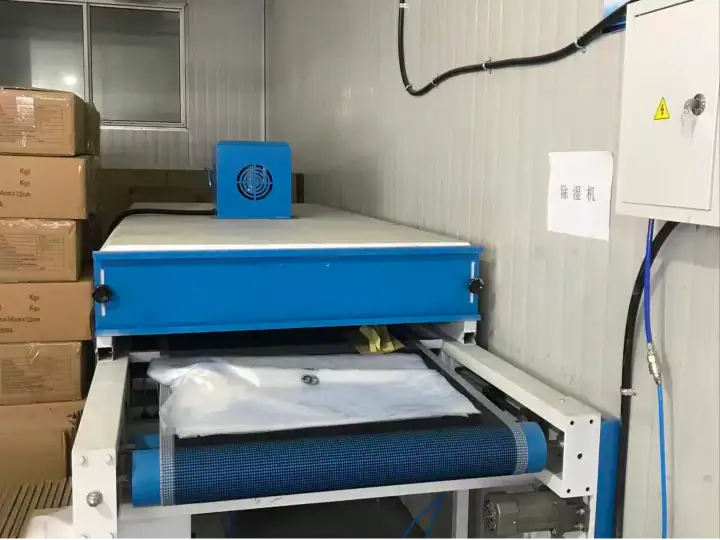
What a circle knitting and woven apparel manufacturer does
This page is about the plant that handles both cut-and-sew constructions. A circular-knit style begins as fabric knitted on the machines below, then gets cut and sewn. A woven style begins as rolled cloth, cut into panels and rebuilt with fusing, lining and topstitching. Almost all the structure in a woven style is engineered rather than inherent in the fabric, which is why two factories can produce very different jackets from the same roll. We cover custom clothing manufacturers in China on a page of its own.
We are Ningbo United Fish, trading as nbfish. Woven and knit programmes run in one Ningbo plant, flat machine sweaters in our second, and one merchandiser owns your order across both. Same QC file, same shade standard, one person to call.
OEM: your tech pack, built exactly as specified, including fusing, lining and hardware.
ODM: start from a body we have developed and change fabric, colour, print or trims.
Private label: our developed body carries your labels and packaging, which is the fastest route to a first drop.
The knit line: circular knitting, then cut and sew
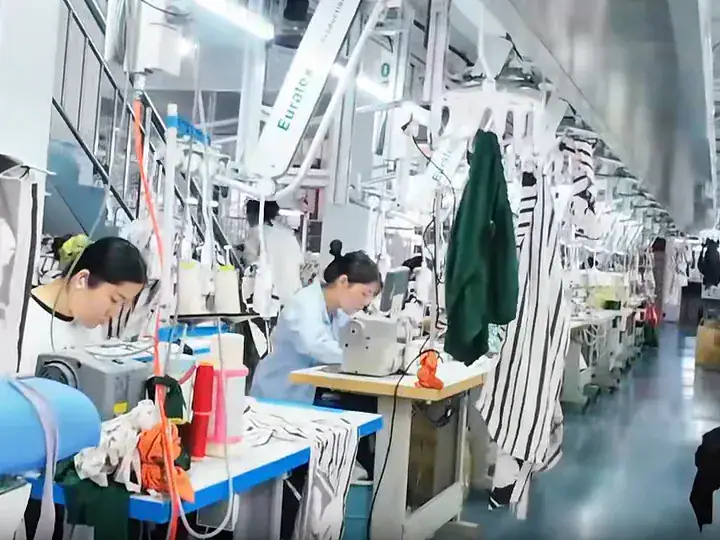
The knit route starts on circular machines in 12G–28G, producing the jersey, rib and interlock bodies behind most knit programmes. From there the fabric follows the cut-and-sew path: inspection under the 4-point system, pre-shrinking before the lay, marker-based cutting, then sewing on the hanging line where flat-lock machines keep seams flat and comfortable. Needle detection is the last gate before packing. Knit bulk runs 45–70 days after PP approval and fabric confirmation.
The difference between the two routes sits in where a garment gets its shape. In knits the fabric already carries it, so our attention goes to gauge, weight and shrinkage instead of fusing and interlining. Pre-shrinking is therefore not optional on this route: it is what holds a jersey top or a knit dress to size after the first wash.
Typical programmes: knit tops, knit dresses, knit skirts and jersey layers inside a mixed collection.
The woven line: from roll to garment
| Step | What happens | What it decides |
|---|---|---|
| Fabric inspection | Rolls checked on the 4-point system before laying | Whether a shade or a defect reaches the cutting table |
| Pre-shrinking | Dimensional stability controlled before cut | Whether your trousers twist after the first wash |
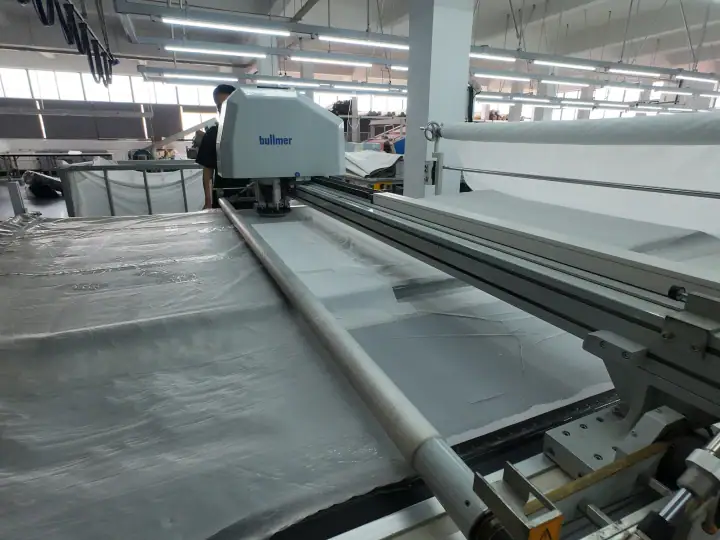
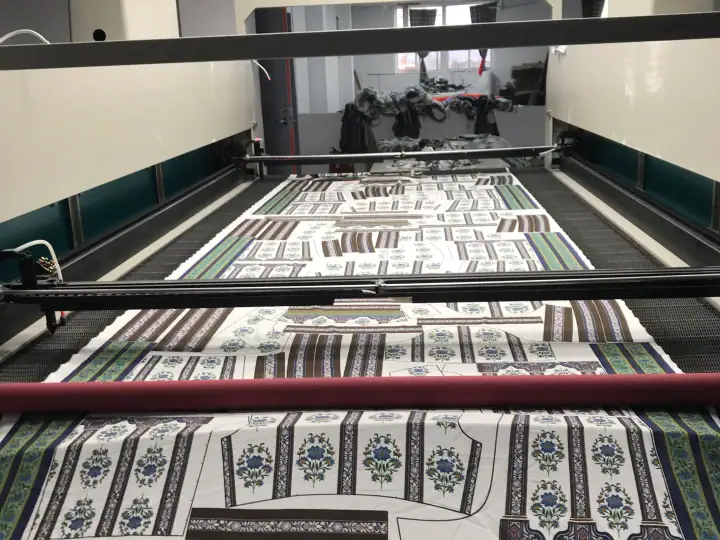
| Marker and cutting | Cut by marker on automatic beds, laser where precision is needed | Yield, and stripe or check matching |
| Fusing | Interlining applied under controlled heat, time and pressure | Whether a collar bubbles after washing |
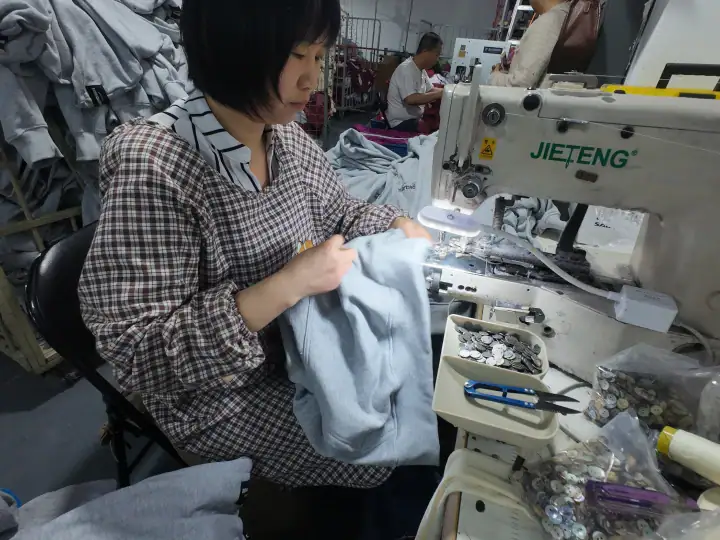
| Sewing | Bundles move on an intelligent hanging line | Consistency of stitch and seam from size to size |
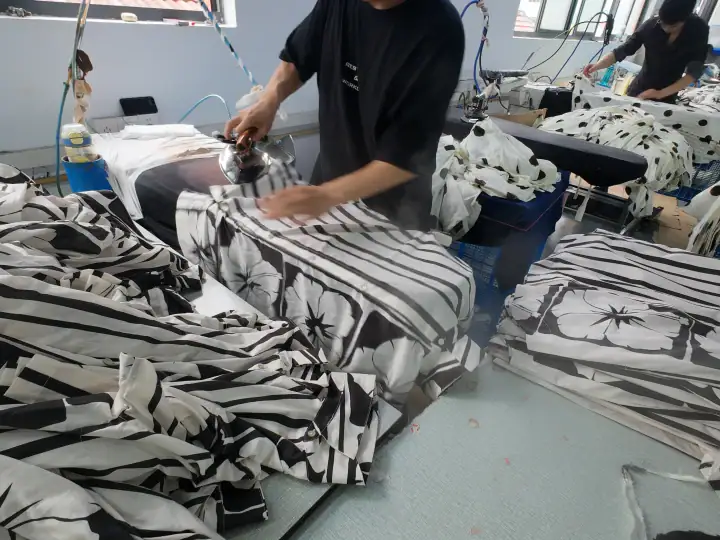
| Pressing and finishing | Pressed on forms, needle detected, packed | How the garment looks out of the polybag |
Woven fabrics we work with
Poplin, twill, corduroy, satin and viscose shirting cover the shirting and dress side; stretch woven, suiting and boucle cover tailoring; faux leather and suede, and embellished bases, come through the same cutting room. We source EcoVero viscose and GRS-certified recycled materials where the brief calls for responsible sourcing. See the eight stages of an order for the full picture.
Fabric inspection before cutting: shade, defects and width are recorded roll by roll.
Fabric choice moves the calendar more than any other line on the quote. An in-stock fabric keeps you at 50 pcs and at the short end of the lead time. A custom weave or a custom print adds development weeks before sampling even starts, and we will say so at quote stage rather than after you have committed.
Openwork and embroidered constructions sit with the knit and cut-and-sew lines as well. Our crochet and lace manufacturing category covers machine crochet, guipure, eyelet embroidery and stretch lace, under the same 50 pcs per style minimum and the same inspection standard.
What gsm does and does not tell you
GSM is areal weight: fabric mass per square metre. It correlates with substance and opacity, but drape is structure and fibre, not just weight. A 200 gsm interlock and a 200 gsm jersey feel like different garments, and a 240 gsm ponte holds a trouser shape that a 240 gsm brushed knit cannot. Weight sets the bracket; structure and finish decide the hand, which is why the structural choice comes first, as our jersey, rib and interlock comparison shows.
Write the tolerance into the spec
Mills deliver within a tolerance, commonly around plus or minus 5%. A spec of 180 gsm without tolerance accepts anything from 171 to 189, which is a visible difference on a white tee. The fix is one line: nominal weight plus tolerance, measured after the agreed wash standard, because finishing changes the number.
| Category | Typical gsm | Spec note |
|---|---|---|
| Jersey tees and tops | 140 to 180 | Check opacity on light colours at the low end |
| Knit dresses | 180 to 260 | Drape decided by structure, not weight alone |
| Rib cuffs and fitted tops | 220 to 320 | Recovery first, weight second |
| Trousers, ponte and heavy knits | 240 to 350 | Recovery wash-tested for knee bagging |
| Sweaters (flat-bed) | Gauge-based | 7GG to 18GG sets the weight band, not gsm |
Where buyers get caught
For how each structure behaves on the body, see the fashion fabric guide before fixing the weight band. Three recurring traps. Opacity on light colours: a 150 gsm white tee passes weight spec and fails the changing-room test, so light colours are checked on the body, not on the scale. Weight drift between dye lots: the same fabric dyed twice can land a few grams apart, which is why the tolerance exists. And sweater programs, where weight is an output of gauge and yarn, not a fabric spec at all: a 7GG and a 14GG sweater from the same yarn are different garments, and the gauge is the line to write down.
Fusing, lining and structure
This is where a blazer either holds its shape for two seasons or bubbles after one wash. Fusing is applied under controlled temperature, time and pressure, and the interlining is matched to the shell rather than pulled off a generic shelf. Lining is cut to the body, not to a standard block. Shoulder construction is built to your tech pack, which is what makes a jacket read as yours and not as a stock pattern.
Equipment behind both lines
The knit and woven line runs the equipment below. The same machines are listed with full specifications on the manufacturing capacity page, together with the sweater plant and the testing laboratory.
| Equipment | What it does for your order |
|---|---|
| Fabric inspection machines | Screens every roll before it reaches the lay, so a flaw is stopped at the fabric stage, not found in a finished piece. |
| High-speed automatic cutting beds | Precision and volume on woven panels and long runs. |
| Automatic laser cutting beds | Sealed, clean edges on detailed panels and synthetics, where a blade would fray or distort the line. |
| Intelligent hanging production lines | Each bundle is tracked through sewing, so progress and bottlenecks stay visible hour by hour. |
| Fabric pre-shrinking machines | Relaxes the fabric before the lay, so measurements and leg alignment survive home washing. |
| Flat-lock machines | Flat, comfortable seams for next-to-skin knit and stretch styles. |
| Specialised template machines | Holds collar and pocket geometry identical from the first piece to the thousandth. |
| Professional ironing machines | Form pressing that locks in the final measurement before a garment is packed. |
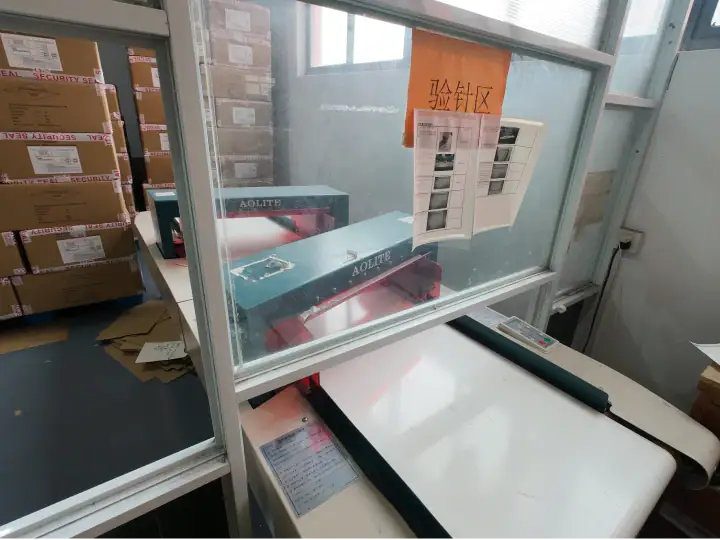
| Needle detection machines | No piece leaves the line without passing metal detection, a condition most retail buyers write into contracts. |
The risks worth managing on both lines
A trouser leg that spirals after washing is a fabric problem, fixed by pre-shrinking and by controlling the lay direction, not by sewing it straighter. We check skew on the bulk lot before cut. The same skew control applies to circular-knit programmes, where torquing shows up as a twisting side seam.
Two dye lots of the same colour will not match by eye. We match bulk to the approved lab dip on a spectrophotometer and report Delta E, so a reorder in six months lands where the first drop did.
Bubbling, strike-through and delamination come from a mismatch between interlining, shell and press conditions. We test the combination on the actual bulk fabric before the line is set.
MOQ, sampling and lead time
| Item | Our standard | Note |
|---|---|---|
| MOQ | 50 pcs per style | Sizes mixed within the quantity. Tailored styles with custom fusing are quoted case by case. |
| Sampling | 7–10 days | When fabric is available. A custom weave, print or yarn development adds time. |
| Bulk, knit | 45–70 days | Circular-knit programmes, after PP approval and fabric confirmation. |
| Bulk, woven | 45–90 days | After PP approval and fabric confirmation. Tailoring sits at the longer end. |
| Bulk, sweaters | 30–55 days | Flat-machine programmes in our second plant; see the sweater line. |
| Payment | 20% deposit, 80% balance by T/T or L/C at sight | |
| Quote turnaround | 24 hours | A firm number with a tech pack, a range without one. |
Quality control on both lines
Fabric passes the 4-point system before it is laid, on both lines. Bulk shrinkage and torquing are measured after pre-shrinking and must sit inside the tolerance your spec states. In-line inspectors sit on the line, and every finished garment is inspected piece by piece before packing. Where a buyer specifies AQL 2.5 sampling inspection instead, that standard applies. Measurements are checked against your graded spec rather than against our own block, and needle detection runs before packing.
The testing behind these checks runs in our own laboratory to AATCC methods: shrinkage, pilling, rubbing and perspiration fastness, and colour under standard light sources. Bulk colour is matched to the approved lab dip on a spectrophotometer and reported as Delta E. You can start at 50 pcs per style and scale the style once it sells.
Knit or woven: which line fits your collection
Knit gives you stretch and softness. Woven gives you structure and a crisp edge. Most mixed collections need both, which is why they share one plant and one delivery plan. Flat-machine sweaters run in our second plant on 7GG–18GG flat knitting machines; see the sweater line for the full picture.
| Line | How it is made | Hand feel | Bulk lead time | Best for |
|---|---|---|---|---|
| Knit | Circular knitting, then cut and sewn | Soft, stretchy, follows the body | 45–70 days | Tees, knit dresses, knit skirts, jersey layers |
| Woven | Cut and sewn from rolled cloth | Structured, crisp, tailors well | 45–90 days | Shirts, trousers, blazers, tailored outerwear |
Running a mixed drop is routine here: both halves of your range are quoted, tracked and shipped under a single delivery plan, and sweater programmes join the same window.
Certifications and compliance
We hold BSCI, OEKO-TEX and REACH documentation, and work with GRS-certified recycled yarn where the brief calls for it. Ask for the certificate number, the validity window and the scope. A certificate with a date and a scope tells you more than a logo on a website.
Frequently asked questions
Q: What is your MOQ for woven styles?
50 pcs per style, sizes mixed inside that quantity. Tailoring with custom interlining or a structured shoulder is quoted case by case, because the set-up is different from a simple woven top.
Q: Why is woven lead time longer than knit?
A woven style carries more operations: fusing, lining, topstitching, pressing on forms. Fabric development sits in front of all of it. Woven bulk runs 45–90 days against 45–70 for knit and 30–55 for flat machine sweaters.
Q: Can you do a fully lined blazer at 50 pcs?
Yes, and we will quote the set-up honestly rather than quote low and revise. Bring the tech pack early and we can usually suggest a half-lined alternative that reads the same on the hanger.
Q: Do you handle prints and placement work?
Yes. We plan the print into the marker so placement lands where the designer put it, and we flag anything that will not survive a repeat at quote stage.
Q: Where is my woven order made?
In the Ningbo plant that also runs our knit programmes. Flat machine sweaters run in our second plant. Same QC standard in both, one merchandiser accountable across both.
START A PROJECTReady to Build Your Next Collection?
Tell us about your project
a specialist replies with a tailored quote and timeline. No account needed.
Typical reply confirm SLA
Export countries
Low MOQ (pcs)
You can send your tech pack, and we will come back within 24 hours.