A Women’s Fashion and Fabric Guide for Brands: Dresses, Skirts and What to Cut Them From
Fashion vocabulary is inconsistent by trade. The same word means different things in a showroom, a tech pack and a fabric market. This guide collects the terms buyers and designers run into most: the fabrics, the dress and skirt types, the jacket categories, and what those names actually decide on a production line.
1. Fabrics at a glance: satin, modal and the regenerated cellulose family
Fabric names fall into two groups: the fibre the yarn is made from, and the weave or finish that gives the surface. Confusing the two is what leads to orders that arrive with the wrong hand feel.
| Name | What it is | Typical use |
|---|---|---|
| Satin | A weave with floating yarns, shiny on one face | Slip dresses, blouses, linings, occasion wear |
| Cupro | Regenerated cellulose from cotton linter, fine and drapey | Blouses, dress linings, fluid silhouettes |
| Modal | Regenerated cellulose, soft with good recovery | Knit tops, loungewear, blended wovens |
| Viscose | The broad regenerated cellulose family | Everything from dresses to linings |
| Jersey knit | Knitted loops, stretch by construction | T-shirts, dresses, casual tops |
| Woven poplin / twill | Interlaced yarns, stable, little stretch | Shirts, trousers, structured dresses |
For a deeper dive into the fibre with the most confusing name, see what is cupro fabric, which covers how it is made and how it behaves in production.
2. Satin fabric: what it is and how it is made
Satin is defined by the weave, not the fibre. How is satin made? The loom floats warp yarns across several weft yarns before binding, so the surface is mostly uninterrupted floats. That is what produces the shine and the slippery hand. The back of the same cloth is duller, because the binding points sit there.
What is satin fabric made out of? Anything that can be a yarn: polyester, acetate, silk, or blends. Polyester satin is the workhorse for volume programmes because it presses cleanly and costs less. Acetate gives a softer, cooler hand. Silk satin sits in a different price class and needs different care instructions.
Types of satin fabric are usually named by weight and finish: charmeuse for light drape, duchess for body, crepe-back satin for a reversible face. When a design says satin without a weight or a fibre, the quote is a guess. A spec sheet should carry the fibre, the weight and the finish.
3. Dress types: a working taxonomy
Types of ladies dress vary by region and by store. For production, the useful grouping is by construction, because construction decides the pattern block and the fabric direction.
- Shift and A-line: straight or gently flared, minimal waist shaping. Forgiving on fit, works in wovens and moderate knits.
- Sheath and bodycon: close to the body, needs stretch or precise tailoring. Jersey and ponte knits, or structured wovens with darts.
- Slip and bias-cut: cut on the bias so the fabric drapes over the body. Satin and cupro are the usual choices. The bias cut grows with wear, so the pattern needs to account for it.
- Wrap and shirt dress: built like a top with a skirt attached. Woven poplin, rayon, crepe.
- Sweater dress: knitted from yarn in panels, not cut from fabric. Runs on the flat-knitting line, in gauges from 7GG to 18GG.
Each type points to a different production line. Knit and woven dresses run on cut-and-sew, sweater dresses run on flat knitting. Both routes are covered by our woven apparel manufacturing page and our sweater manufacturing page.
4. Skirt types: lengths, silhouettes and the names buyers use
Types of skirt are named by length first, silhouette second. Length is measured from the waist seam down; the same name shifts an inch between brands, so the measurement goes in the tech pack.
- Mini: hem above the knee. Usually in stretch wovens or stable knits.
- Midi: hem between knee and ankle, the most common contemporary length.
- Maxi: what a long skirt is called in most markets, reaching the ankle or floor.
- A-line: fitted at the waist, flaring toward the hem. Minimal stretch needed.
- Column / pencil: straight and narrow, needs walking ease or a vent.
- Bias-cut: flares without gathers, drapes close. Satin and cupro are the usual fabrics.
- Tiered and gathered: sections joined with gathers, volume at the hem.
Skirt type and fabric interact directly: a bias cut in polyester satin behaves differently from the same pattern in cupro. When the design calls for a specific fall, the fabric should be named on the same page as the silhouette.
5. Outerwear: jacket types and how warm they actually are
The warmest jacket question usually gets answered by category. The better answer is by construction, because warmth comes from what traps the air.
- Down-filled puffer: highest warmth for its weight in dry, still cold. The shell needs to be windproof and down-proof.
- Synthetic-fill jacket: heavier for the same warmth, but it keeps working when damp. The practical choice for wet cold.
- Wool-blend coat: warmth from the fibre and the loft of the weave, better in wet cold than untreated down, heavier than either.
- Softshell / fleece: mid-layer warmth, wind resistance varies by face fabric.
What is the warmest winter jacket for your market? Match the fill to the climate and the shell to the weather. A synthetic fill with a sealed shell for wet winters, a high-fill down with a windproof shell for dry cold. The jacket type name alone does not carry that information.
6. From fabric to garment: what the names mean on a tech pack
A tech pack translates the showroom words into production instructions. The parts that most often cause a wrong sample:
- Fabric named as a fibre only: polyester is a fibre; satin is a weave. Both belong in the spec, plus weight and finish.
- Silhouette named without measurements: A-line means different flare amounts to different people. A graded measurement chart removes the argument.
- Drape described, not specified: words like fluid or structured get interpreted. If drape matters, name the fabric and the weight.
- Care instructions copied from a similar style: satin in polyester and satin in acetate need different labels.
Our tech pack guide covers the full format.
7. For brands and buyers: where manufacturing fits
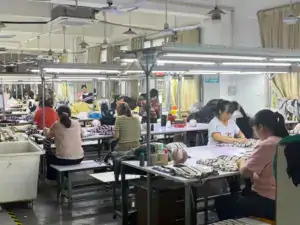
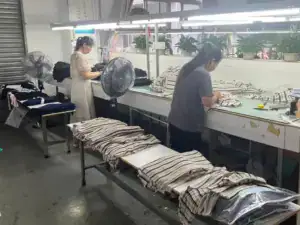
Everything above is vocabulary. Production is where the vocabulary gets tested. We manufacture the categories in this guide across two plants in Ningbo: knit and woven cut-and-sew in one, flat-knit sweaters in the other, both run to one colour standard and one QC process, with a single merchandiser across both.
- Woven dresses, skirts, blouses, trousers: the cut-and-sew line. See woven apparel manufacturing.
- Sweater dresses, knit tops, cardigans: the flat-knitting line, 7GG to 18GG. See sweater manufacturing.
- Private label and OEM programmes: from sketch or reference to bulk, at 50 pcs per style. See private label and OEM.
- Fabric-led development: if the fabric decides the garment, send the fabric reference first and we will build the styles around what it can do.
For a quote or a sample plan, send the style references and the target delivery window.
8. Women’s fashion & fabric FAQ
Q: What is satin fabric made out of?
A: Satin is a weave, not a fibre. It is made by floating warp yarns over weft yarns so one side comes out smooth and shiny. The yarn can be polyester, acetate, silk or a blend, which is why two satins can feel completely different.
Q: What is a long skirt called?
A: A skirt that reaches the ankle is usually called a maxi skirt. Mid-calf is midi, and above the knee is mini. In tech packs the length is measured from the waist seam, so the name and the measurement should both be specified.
Q: What is the warmest type of winter jacket?
A: For still, dry cold, a down-filled jacket with a windproof shell is the warmest for its weight. For wet cold, synthetic insulation or a wool-blend coat holds warmth better when damp. The shell fabric and the fill matter more than the jacket category name.
Q: What is the difference between cupro and viscose?
A: Both are regenerated cellulose fibres. Cupro is spun from cotton linter and comes out finer, with a silk-like drape and lower static. Viscose is the broader family. A full comparison is in our cupro fabric guide.
Q: What do dress and skirt names mean for manufacturing?
A: The name sets the block and the fabric direction: an A-line skirt needs less stretch than a bias-cut skirt, and a satin slip dress behaves differently from a knit dress on the line. A tech pack should carry the name, the measurements, and the fabric spec together.