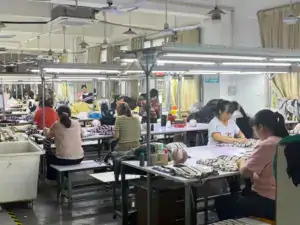
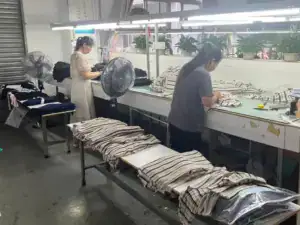
The three rounds that matter
A proto confirms the interpretation of your design. A fit sample confirms the measurements and the wear. A pre-production sample, the PP, locks everything: fabric, trims, construction and workmanship, and bulk is measured against it. Buyers who skip the PP to save a week give up the reference document that protects them when a bundle goes wrong.
| Round | What it confirms | Typical turnaround |
|---|---|---|
| Proto | Design interpretation, construction approach | 7 to 10 days with fabric in house, 10 to 15 without |
| Fit sample | Measurements, wear, grading across sizes | 7 to 10 days after fit comments land |
| PP sample | Full spec lock: fabric, trims, workmanship | About 7 days after bulk fabric arrives |
The timeline, honestly stated
Sampling runs 7 to 10 days when the fabric is already in the building and 10 to 15 days when it has to be bought in. Every quote should tell you which case you are in. Lead times for bulk start from PP approval and fabric confirmation, not from the first email, which is why the sampling calendar is the bulk calendar.
What turns two rounds into five
Three habits cause almost all of the drift. Comments arriving split across days, so the factory works a moving target. Fabric changes after the fit round, which invalidates the measurements the fit was approved on. And spec details that were never written: if the cuff construction was not in the tech pack, the proto is a guess and the comment is a redesign. Write the spec, comment once, and hold the fabric decision until after the fit round closes. The starting point is a complete brief, which our tech pack guide walks through line by line.
Sampling discipline carries straight into bulk scheduling, which is why the sampling and lead time process are documented together rather than quoted separately.
Sampling works the same way whether your programme is private label or fully custom. The custom clothing manufacturers in China page walks through the full custom path from tech pack to PP approval, and what stays fixed at MOQ 50 pcs per style.
Frequently asked questions
How many samples does a typical program need?
A clean program with a written spec runs three rounds: proto, fit, PP. Styles with print placement or beading usually add one placement round. Anything past four rounds is usually a spec problem, not a factory problem.
Why is sampling slower when fabric is not in house?
The mill’s lead time adds to the sampling clock, and a dye lot bought for sampling may not match the bulk lot. Sourcing from in-house or stocked fabric removes both gaps, which is why the 7 to 10 day quote is conditional on fabric availability.
Is the PP sample charged separately?
It is part of the sampling cost quoted at the start. What changes the bill is re-work caused by comments that reverse an earlier approval, so the cheapest sample program is the one with the most complete tech pack.