The myth that true sustainability and massive commercial scale cannot coexist is officially outdated. Recently, Ningbo United Fish Clothing Co., Ltd. shattered the industry’s scaling barrier by successfully manufacturing over 1 million pairs of premium eco-friendly pants.
This milestone is a definitive case study for the sustainable fashion supply chain. It proves that global brands can achieve high-volume green apparel production, maintain aesthetic standards, and meet stringent Fashion CSR compliance—all without sacrificing commercial profit margins.
Here is the material, engineering, and traceability blueprint behind this million-unit success story.
The Scaling Barrier: Historic Obstacles to Mass Sustainable Fashion Manufacturing
Any seasoned procurement director knows that manufacturing one thousand eco-friendly garments is essentially a design project. Manufacturing one million units, however, is a rigorous feat of industrial engineering.
When brands attempt to scale sustainable materials, they typically hit three major roadblocks:
- Physical Inconsistency: Natural or recycled fibers can exhibit high variances in color uptake (dyeing), shrinkage, and tensile strength across different bulk dye lots.
- Traceability Failures: As volume increases, maintaining a watertight chain of custody for certified materials becomes a logistical nightmare, exposing brands to greenwashing accusations.
- Cost Prohibitions: Without a deeply integrated, highly efficient factory partner, the premium cost of green raw materials destroys retail profit margins.
To overcome these persistent scaling barriers, we completely re-engineered product development starting at the yarn stage.
The Perfect Sustainable Fabric Mix: EcoVero™ Viscose + GRS Recycled Polyester
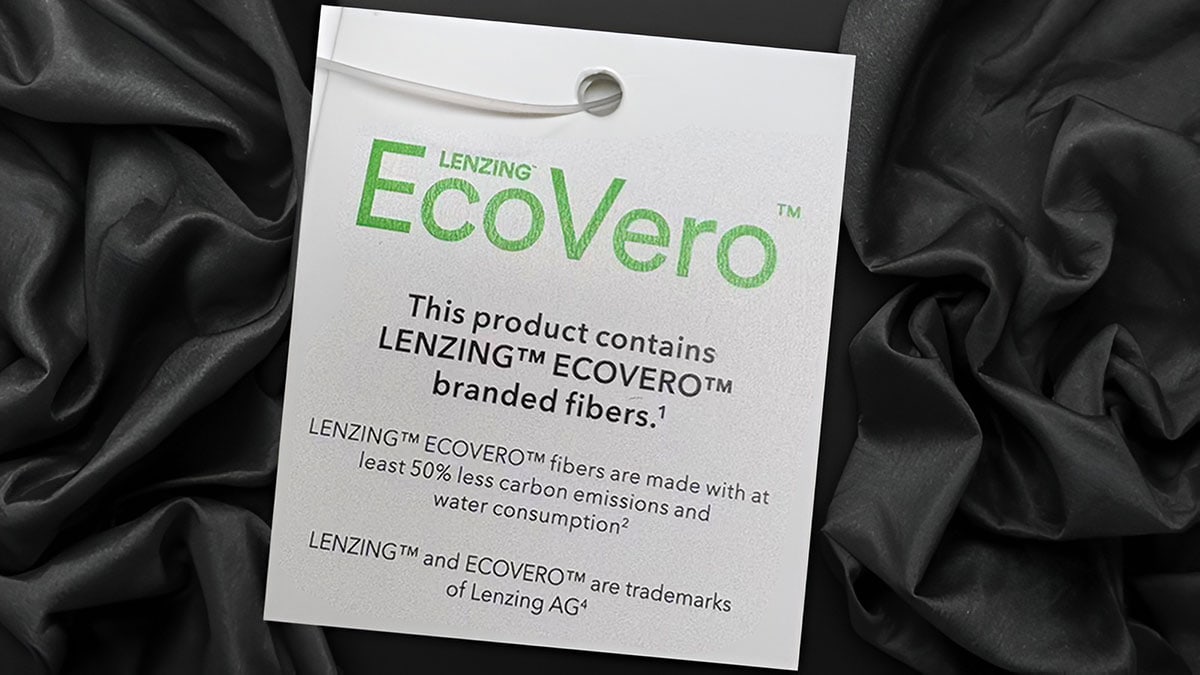
To achieve the ideal balance of a luxurious hand-feel, structural durability, and strict environmental compliance, the sourcing and R&D teams at United Fish developed a highly specific, commercially viable sustainable fabric blend.
The core of this million-unit success relies on the synergy of two distinct, industry-leading fibers:
EcoVero™ Viscose: The Foundation of Premium Feel
Derived from certified, responsibly managed wood sources, EcoVero™ Viscose is manufactured using an eco-responsible production process. For the consumer, this fiber provides a luxurious, silky-smooth drape and exceptional breathability that feels inherently premium.
the brand’s CSR department, the metrics are undeniable: EcoVero™ generates up to 50% lower emissions and water impact compared to generic viscose, significantly reducing the garment’s overall carbon footprint.
GRS Recycled Polyester: The Structural Backbone
While viscose offers beautiful drape, pants require structural integrity to survive daily wear and repeated laundering. By integrating GRS Recycled Polyester, we actively divert plastic waste from oceans and landfills while solving a critical physical requirement.
This recycled synthetic fiber injects vital dimensional stability, wrinkle resistance, and robust tensile strength into the fabric. It acts as the structural backbone, ensuring that the tailored silhouette of the pants remains crisp wash after wash.
Material Comparison: Why This Blend Wins Commercially
| Metric | Conventional Viscose & Virgin Poly | Our EcoVero™ & GRS Poly Blend | Commercial Benefit for Brands |
| Water Impact | High baseline usage | Up to 50% lower (EcoVero component) | Meets corporate water reduction targets |
| Raw Material Source | Unverified forests & petroleum | Certified renewable wood & post-consumer plastics | Strong marketing narrative against greenwashing |
| Dimensional Stability | Prone to shrinkage & torquing | Excellent (stabilized by GRS Poly) | Lower return rates due to garment distortion |
| Traceability | Often opaque | Fully certified via Lenzing and GRS | Seamless passage through brand factory audits |
Building Consistent Mass Production Through Rigorous Engineering
Sourcing the right materials is only step one. As a leading eco-friendly pants manufacturer, we know that executing a seven-figure production run requires fanatical attention to quality control.
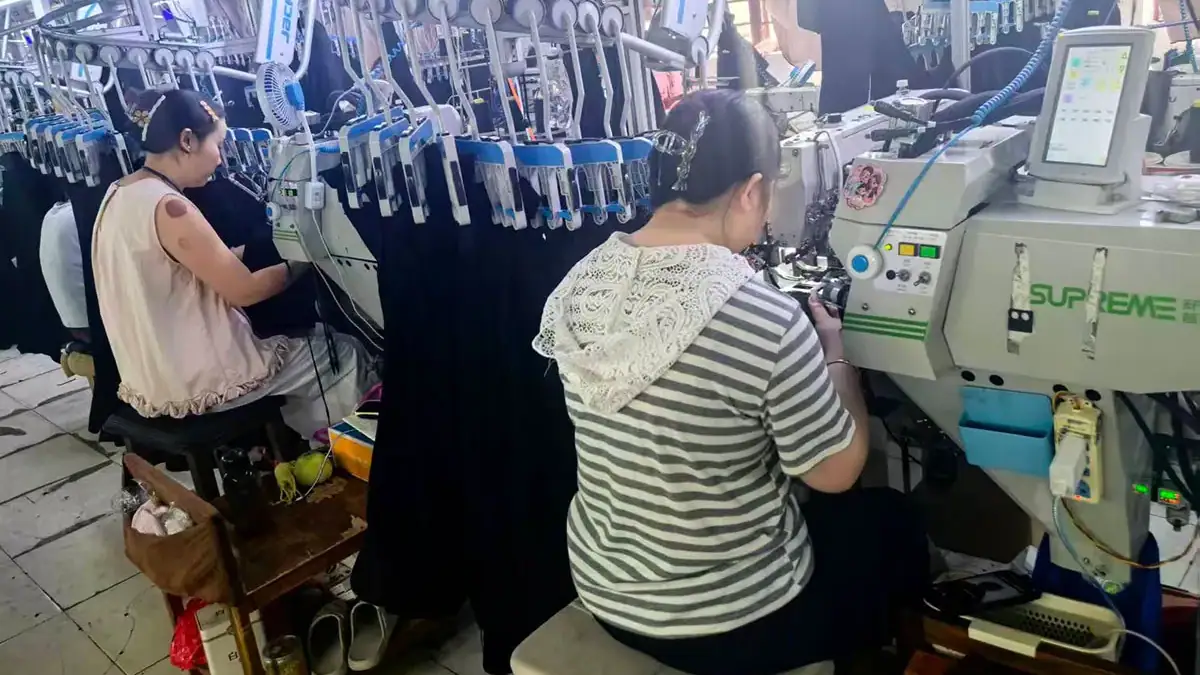
To maintain flawless consistency across over one million units, United Fish relies on a vertically integrated, heavily digitized production workflow.
- Controlling the Delta E: Color consistency is the most common point of failure in massive production runs. All bulk fabrics pass through our internal testing center where we utilize electronic spectrophotometers to lock in precise Delta E color values. If a dye lot strays beyond the commercial tolerance, it is caught before it ever reaches the cutting table.
- Managing Shrinkage and Torquing: Because this sustainable fabric blend behaves differently than conventional synthetics, we deploy advanced fabric pre-shrinking machines to control torquing (skewing) and shrinkage.
- AATCC/ISO Lab Standards: Every batch is tested in advanced internal labs to ensure physical performance—such as pilling resistance, colorfastness to washing, and seam slippage—strictly adheres to international AATCC and ISO standards.
We do not leave quality to chance; we engineer it into the supply chain.
Verified CSR: Closed-Loop Material Traceability
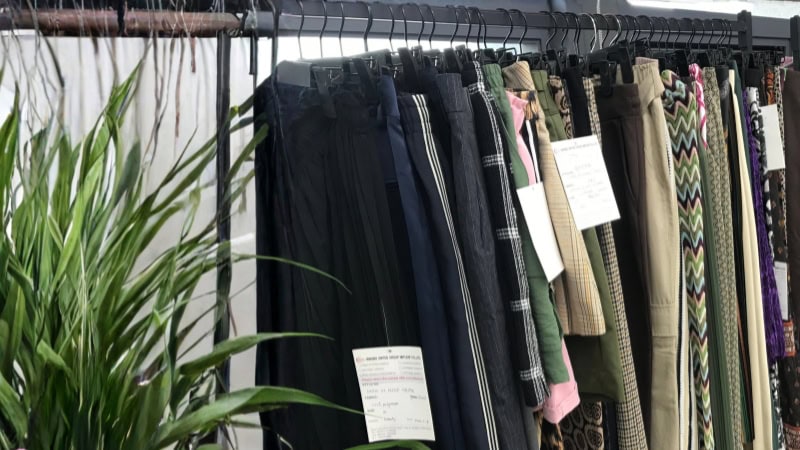
Today’s modern fashion houses face immense, often unforgiving pressure from shareholders, governments, and consumers to meet Corporate Social Responsibility targets. If a brand claims a product is sustainable, they must be able to prove it instantly.
Partnering with an unverified factory can lead to disastrous PR crises. This is where our commitment to Fashion CSR compliance becomes our clients’ greatest asset.
For the entirety of the million-unit run, every single batch of material was backed by valid Transaction Certificates (TC). A TC is the ultimate proof of custody in the textile industry. It guarantees that the volume of certified sustainable yarn purchased exactly matches the volume of finished garments shipped.
This closed-loop documentation ensures that our clients’ sustainability claims are 100% genuine, mathematically verifiable, and entirely audit-proof. When brand compliance officers audit our facilities, the paperwork is as flawless as the stitching.
Balancing Sustainability & Commercial Profitability
The most important takeaway from this million-unit milestone is that transitioning to green materials does not require financial sacrifice.
By centralizing the sustainable apparel manufacturing process with a highly capable vendor, brands benefit from economies of scale. The efficiencies we have built into our fabric sourcing, digital quality control, and automated sewing lines offset the premium costs associated with certified raw materials.
Global brands can seamlessly transition their core, high-volume programs into sustainable success stories while protecting their profit margins and elevating their aesthetic appeal.
Key Takeaways: A Proven Model for Eco-Friendly Apparel
The million-unit legend is more than just a production record for Ningbo United Fish Clothing Co., Ltd.; it is a blueprint for the future of fashion. It proves definitively that with the right materials, rigorous engineering, and transparent compliance, eco-friendly fashion is highly commercially viable.
If your brand is ready to upgrade its core collection, eliminate supply chain risks, and meet aggressive CSR targets without compromising on quality or margin, the infrastructure is already here. Discover the difference that United Fish sustainable clothing can make for your next high-volume program.
Frequently Asked Questions (FAQ)
How do you guarantee the authenticity of the EcoVero™ and GRS materials used in production?
We provide full traceability through official Transaction Certificates (TC) for every bulk order. Furthermore, our EcoVero™ fabrics are verified through Lenzing’s certification system, and our recycled polyester is strictly tracked by Global Recycled Standard (GRS) documentation, ensuring total Fashion CSR compliance for your brand audits.
Does integrating sustainable materials like GRS Recycled Polyester affect the durability of the pants?
No, it actually enhances it. The GRS Recycled Polyester we use is engineered to match the tensile strength and performance of virgin polyester. When blended with EcoVero™ Viscose, it acts as a stabilizing agent, offering excellent wrinkle resistance and dimensional stability, ensuring the garment holds its shape over time.
Is this sustainable fabric blend customizable for different apparel styles beyond pants?
Absolutely. While this specific million-unit run was focused on structured pants, our R&D team can manipulate the weight, weave, and finishing of this sustainable fabric blend to suit premium knits, structured woven fashion, blouses, and sustainable loungewear.
Will shifting our core high-volume programs to sustainable manufacturing negatively impact our lead times?
Because Ningbo United Fish Clothing Co., Ltd. has established deep, long-term partnerships with certified yarn spinners and fabric mills, our supply chain is highly stable. We have optimized our production lines specifically for high-volume green apparel, meaning our lead times remain highly competitive and consistent with conventional manufacturing timelines.
What is the best way to start a sustainable apparel program with United Fish?
We recommend starting with a tech pack review of one of your core volume items. Our sourcing team will provide a customized material substitution plan, outlining how we can replace conventional fabrics with our certified green alternatives while detailing cost, MOQ (Minimum Order Quantity), and sampling timelines.