A Sweater and a Sweatshirt Are Not the Same Garment: Here Is Why
A sweater is knitted from yarn. A sweatshirt is cut and sewn from fleece fabric. Everything a buyer cares about follows from that: stretch, sizing, cost, and which production line the order runs on.
The one-line answer
A sweater is made by knitting yarn into shaped panels on a flat knitting machine, then linking those panels together. A sweatshirt is made by cutting panels out of a knitted fleece fabric and sewing them. The sweater is shaped during knitting. The sweatshirt is shaped during cutting.
Pull the fabric across the body and the difference is obvious. A sweater gives, because the loops open. A sweatshirt resists, because the brushed back holds its shape.
How each one is made
Sweater production starts with yarn on cones. We wind the cones, knit panels to a gauge between 7G and 18G, wash or steam the panels, link them on a linking machine, close the seams, and give the garment a final press. The panel is shaped on the machine, so cutting waste is low and the silhouette is set by the knitting programme.
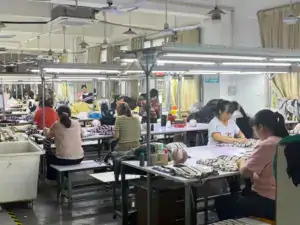
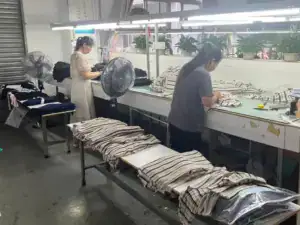
Sweatshirt production starts with fabric. The fleece is knitted in rolls, relaxed, then laid on a cutting table. An auto cutter cuts the panels, and the sewing line assembles the body, sleeves, rib cuffs and hem. Rib is a separate knitted trim that is cut to length and applied. Cut and sew fleece is part of our knitwear work.
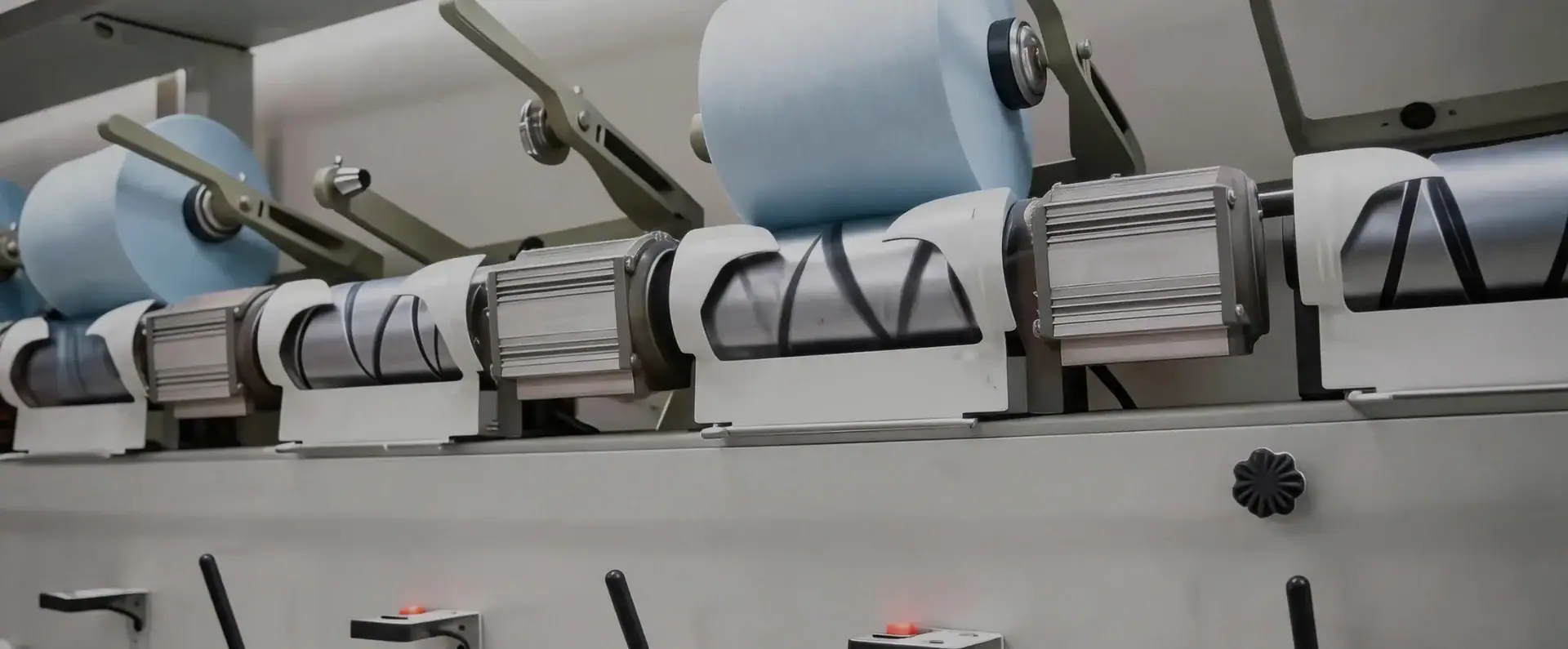
Both routes run through our two Ningbo plants under one standard, handled by one merchandiser from sampling to shipment, so a cardigan and a sweatshirt built to one palette match on the shelf.
Fabric and weight differences
| Sweater | Sweatshirt | |
|---|---|---|
| Built from | Yarn on cones | Fleece or French terry in rolls |
| Specified by | Gauge (7G to 18G) and yarn count | Fabric weight in GSM |
| Typical weight | Set by gauge and yarn, not by GSM | 280 to 420 GSM for most wholesale programmes |
| Stretch | Loops open in both directions | Limited across the body |
| Shape set by | The knitting programme | The pattern and the cut |
| Finishing | Washing, linking, pressing | Brushing, rib application, pressing |
Buyers from a woven background often ask for GSM on a sweater. We ask for gauge and yarn instead, because those are the values the machine is programmed with.
How buyers spec a sweater
- Gauge: 7G for chunky, 12G for most wholesale programmes, 14G to 18G for fine gauge
- Yarn: cotton, viscose, wool, merino, alpaca blends, and recycled options
- Stitch structure: jersey, rib, cable, intarsia, jacquard
- Colour: Pantone reference plus a physical swatch
- Graded size set with tolerances
The tech pack does not need to be long. It needs the five items above and a clear neckline and cuff instruction. See what is a knit top if the terminology is new, and the sampling process for what happens next. Our team returns a first sample in 7 to 10 days once the yarn has arrived.
How buyers spec a sweatshirt
- Fabric weight in GSM, with the face and back construction named
- Body and sleeve cut, with rib height at cuff and hem
- Neckline: crew with rib, or a lined hood with drawcord
- Print or embroidery placement, with a vector file and Pantone reference
- Wash or finish, for example enzyme wash or a brushed back
Print placement is where sweatshirt tech packs most often fall short. A placement sketch with measurements taken from the shoulder seam saves a full sampling round.
MOQ, sampling and lead time
| Item | Sweater | Sweatshirt |
|---|---|---|
| MOQ | 50 pcs per style | 50 pcs per style |
| Sampling | 7 to 10 days once yarn has arrived | 7 to 10 days once fabric has arrived |
| Bulk lead time | 30 to 55 days | 45 to 70 days |
| Inspection | AQL 2.5 | AQL 2.5 |
Sweater lead times are shorter because the yarn route skips fabric knitting, dyeing and relaxation. Both windows start after sample approval and after materials are confirmed.
Still deciding between a knit and a cut-and-sew route? Send us your sketch and we will quote both side by side.
Which line to choose
Choose knitwear when the design depends on texture, stitch structure, or shape knitted into the panel. Cables, intarsia and jacquard only exist on a knitting line, which our sweater manufacturing page covers in detail.
Choose cut and sewn fleece when the design depends on print area, a heavy hand feel, or a relaxed silhouette that needs a pattern rather than a programme. Large chest prints and oversized drops sit better on a sweatshirt.
If the range needs both, we run them in parallel. One merchandiser coordinates the two plants so the palette and the delivery window line up, and the shipment leaves as one consolidation.
Ready to spec your first sample? Our merchandiser returns a quote and a swatch plan within 24 hours.
From the United Fish blog
We write regularly about production detail and buyer questions. See how our linking machines keep sweater seams from blowing out, and the knit and sweater lines we showed at Sydney Expo 2026 for the floor-level view.
Frequently asked questions
Is a sweatshirt a sweater?
No. A sweatshirt is cut and sewn from fleece fabric. A sweater is knitted from yarn into shaped panels. The names are close in some markets, but the production routes are different.
Which one is warmer?
At the same weight a sweater traps more air, because the loop structure is more open. A brushed back fleece comes close.
Can you make both in one order?
Yes. Sweater styles run on the knitting line and cut and sewn styles run on the cut and sew line, with one merchandiser holding both to the same colour standard and the same AQL 2.5 inspection level.
What is the MOQ for a mixed order?
50 pcs per style. A mixed order of sweaters and sweatshirts is fine as long as each style clears 50 pieces.