Cupro Fabric Explained: How It Is Made and Where It Fits in Your Line
Cupro shows up in fabric markets under several names and gets described as everything from artificial silk to eco-rayon. The short answer: it is a regenerated cellulose fibre made from cotton linter, with a fine, drapey hand that behaves well in both shell fabrics and linings. This page explains how it is made, how it compares with the fibres it is confused with, and what to put in a tech pack when a style is built in cupro.
1. What is cupro fabric
Cupro is a filament fibre spun from cotton linter, the short fibres that remain on the cotton seed after ginning. The linter is dissolved, purified, and spun back into a continuous fibre. The result is finer than most viscose, with a smooth surface, a cool touch, and a drape that falls close to the body.
In trade it appears as cupro, cupro rayon, or by the Japanese trade name Bemberg. It is used as a shell fabric for blouses and fluid dresses, and widely as a lining because it slides over the body without clinging.
 clothing manufacturer in China” width=”720″ height=”540″ loading=”lazy” decoding=”async” style=”width:100%;height:auto”>
2. How is cupro fabric made
The process is a wet-spinning route shared with other regenerated cellulose fibres, with cotton linter as the raw material:
- Purification. The linter is cleaned and dissolved into a cellulose solution.
- Spinning. The solution is extruded through spinnerets into a coagulating bath, forming continuous filaments.
- Finishing. The filament is washed, finished and wound onto packages for weaving or knitting.
- Fabric formation. Cupro is woven into crepes, satins and plain weaves, or knitted for stretch styles. The construction chosen at this stage decides the hand more than the fibre does.
How satin is made comes up in the same conversation, because cupro satin is a common combination. Satin is the weave; cupro is the fibre. A cupro satin is a satin weave built on cupro yarn, which gives the shine of the weave with the cool hand of the fibre.
3. Cupro properties: drape, breathability, static and care
- Drape. Cupro falls close and moves easily. Bias-cut skirts and slip dresses in cupro need less ease than the same pattern in a stiffer weave.
- Breathability. The fibre absorbs moisture and releases it quickly, which is why cupro linings feel cool and why the fabric works in warm-weather ranges.
- Static. Lower than polyester and acetate in most conditions. Not zero, and it varies with the finish applied to the fabric.
- Strength. Weaker when wet than cotton, so washing instructions matter. Most cupro garments carry a gentle wash or dry-clean label.
- Colour. Takes dye well, with good depth on dark shades. As with any fibre, the shade band is confirmed on a lab dip before bulk.
4. Cupro vs viscose, modal and bamboo viscose
All four are regenerated cellulose. The differences are in the raw material, the spinning route and the resulting hand.
| Fibre | Raw material | Hand and behaviour |
|---|---|---|
| Cupro | Cotton linter | Fine, cool, silk-like, low static. Common in linings and fluid shells. |
| Viscose | Wood pulp, broad family | Wide quality range. Soft, absorbent, weaker when wet. |
| Modal | Wood pulp, high-wet-modulus route | Softer with better recovery and less sag than standard viscose. |
| Bamboo viscose | Bamboo pulp, viscose route | Similar to viscose. The bamboo origin is in the pulp, not the finished fibre structure. |
If a design calls for a specific fall or hand, the fibre name alone will not carry the decision. Weight and construction do as much work as the fibre, and both belong in the spec.
5. Cupro in garment production
On a production line, cupro behaves like a fine woven. It cuts cleanly but shifts under the presser foot if the feed is not controlled, and it marks easily under a hot iron, so pressing settings are part of the sample approval.
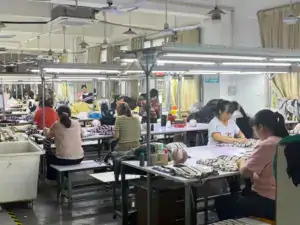
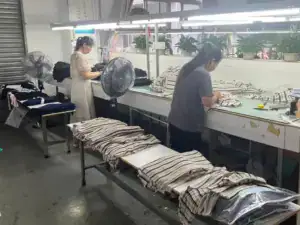
Where the style runs matters. Cupro blouses and dresses run on the cut-and-sew line at the knit and woven plant. There is no sweater-line equivalent, because cupro is built into woven or knitted fabrics rather than knitted into panels on a flat machine. The production flow for cupro garments follows the cut-and-sew route: sample in 7 to 10 days when the fabric is available, 10 to 15 days when sourcing is needed first, then bulk after PP approval and fabric confirmation, with knit programmes running 45 to 70 days and woven programmes 45 to 90.
6. Sourcing cupro garments: what buyers should specify
A cupro style arrives closer to intent when the tech pack carries these four items:
- Fibre content: 100% cupro or the exact blend, with percentages.
- Weight and construction: woven or knitted, plus the fabric weight, because cupro satins and cupro crepes behave differently in the same pattern.
- Seam and fusing plan: fine fabrics need narrower seams and lighter fusings, confirmed at sample stage.
- Care label: gentle wash or dry-clean, matched to the finish on the fabric.
Our woven apparel manufacturing page covers the cut-and-sew route in full, and our tech pack guide covers the document format. For a sample in cupro, send the fabric reference and the style and we will come back with a sample plan.
7. Cupro fabric FAQ
Q: What is cupro fabric?
A: Cupro is a regenerated cellulose fibre spun from cotton linter, the short fibres left on the cotton seed after ginning. The fabric is fine, smooth and drapey, with a silk-like hand and lower static than most synthetics.
Q: How is cupro fabric made?
A: Cotton linter is dissolved, purified and spun through a wet-spinning process, then woven or knitted into fabric. The fibre is sometimes called by its Japanese trade name, Bemberg.
Q: What is the difference between cupro and viscose?
A: Both are regenerated cellulose. Cupro uses cotton linter and comes out finer, cooler and less prone to static. Viscose is the broader family and covers a wide range of qualities, from rough to fine.
Q: Is cupro fabric breathable?
A: Yes. Cupro absorbs moisture and releases it quickly, which is why it feels cool in warm conditions and is often used as a dress lining as well as a shell fabric.
Q: What should buyers specify when sourcing cupro garments?
A: Specify the fibre content, the weight, the weave or knit construction, and the care label. Cupro behaves like a fine fibre in cutting and sewing, so seam type and fusing choice should be confirmed in the tech pack.